filmmakers
Satyajit Ray
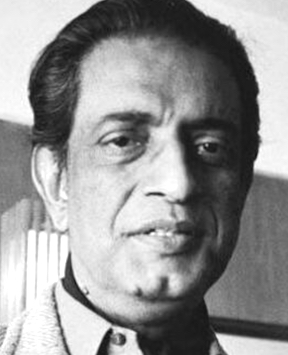
On this date in 1921, legendary filmmaker Satyajit Ray was born in Kolkata, India. His father, Sukumar Ray, was an eminent children’s writer and illustrator who died when he was 2. His mother raised him in the home of his paternal grandfather Upendrakishore Ray Chowdhary, also an accomplished writer.
After earning a degree in economics from Presidency College, Ray majored in fine art at the Visva-Bharati University, established by Nobel laureate Rabindranath Tagore. He then went on to work for a British advertising agency.
Ray had developed a deep interest in cinema by this time and helped establish the Calcutta Film Society. He assisted the iconic French director Jean Renoir when Renoir filmed “The River” in India in 1951. Ray decided to adapt a Bengali novel for his first film, “Pather Panchali” (“Song of the Little Road”).
This became the initial installment of the Apu trilogy, thought to be one of the finest achievements in the history of cinema. Ray went on to direct 36 movies, including 29 feature films, many of which are considered classics.
A humanist ethos pervaded his movies, which ranged from historical treatments and contemporary sociopolitical themes to interpersonal sagas and detective stories. His depiction of women was particularly noteworthy, with a number of his movies featuring strong female protagonists.
His work won awards at major film festivals, including Cannes, Venice and Berlin, and received admiration from directors such as Martin Scorsese (who led the campaign to get Ray an Oscar) and Wes Anderson (who used Ray’s music as the background score for “The Darjeeling Limited”). Ray’s Honorary Academy Award in 1992 “in recognition of his rare mastery of the art of motion pictures and of his profound humanitarian outlook” was flown into his Kolkata hospital room. He died 24 days later.
Ray’s movies often critique organized religion. “Devi” (“The Goddess”) portrays the negative ramifications of a young bride being worshipped as divine in 19th century rural Bengal. “Ganashatru” (“An Enemy of the People”), an adaptation of the classic Ibsen play, shows how a doctor is ostracized when he has the temerity to point out that the supposedly holy temple water is contaminated.
“Mahapurush” (“The Holy Man”) exposes godmen. (Godman is a term for a type of healer or spiritual leader with paranormal powers seen as a demigod-like figure by cult followers.) “Sadgati” (“Deliverance”) depicts the horrific consequences of the caste system. Ray was born to a reformist Hindu family but made clear his disdain for religion even if he sometimes hedged on his nonbelief.
“I was born into the Brahmo [a reformist Hindu sect] community, but I dislike such labels. Hinduism attracts me, with its coiled cultural layers, only as a rich source of contrastive situations and personalities. Well, I guess I’m an agnostic.” (“Satyajit Ray: Interviews,” ed. Bert Cardullo, 2007)
Ray suffered a heart attack in 1983 that severely limited his productivity in the remaining years of his life. A heavy smoker but nondrinker, he often worked into the wee hours of the morning. He died at age 70 due to his heart condition. (D. 1992)
PHOTO: Ray in New York in 1981; photo by Dinu Alam under CC 4.0.
INTERVIEWER: “Do you believe in God?”
RAY: “No. I don’t believe in religion either. At least not in organized religion. Nor have I felt the necessity for any personal religion.”— India Today, Feb. 15, 1983
Compiled by Amitabh Pal
© Freedom From Religion Foundation. All rights reserved.
Ingmar Bergman
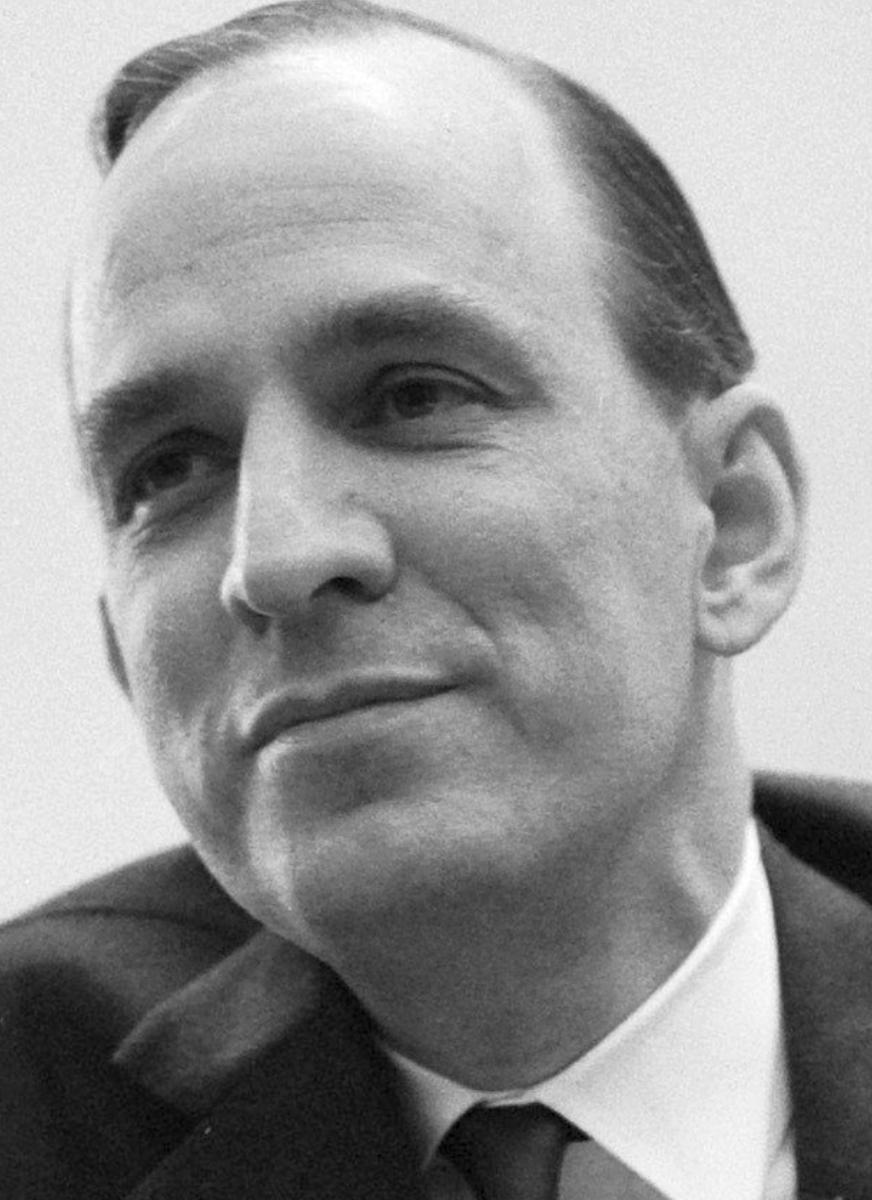
On this date in 1918, Ingmar Bergman was born in Uppsala, Sweden, the son of a strict Lutheran minister. He studied art and literature at the University of Stockholm, went into theater, and made his directorial film debut in 1944. His 1955 “Smiles of a Summer Night” attracted international acclaim, followed by “Wild Strawberries (1957) and “The Seventh Seal” (1957), in which a knight portrayed by Max von Sydow challenges Death to a chess match.
He then made “The Virgin Spring” (1960), “Persona” (1966), “Scenes from a Marriage,” co-starring one of his favorite actresses, Liv Ullman (1974), and “Fanny and Alexander,” which won a Best Foreign Film Oscar in 1983. His 50 feature films often explored existential questions. Bergman once said, “I believe in other worlds, other realities. But my prophets are Bach and Beethoven.” (New Yorker Staats-Zeitung July 9, 2005.)
He was married five times: to Else Fisher, Ellen Lundström, Gun Grut, Käbi Laretei and Ingrid von Rosen, and had nine children. He died at age 89. (D. 2007)
PHOTO: Bergman in Amsterdam in 1966; Joost Evers/Anefo photo under CC 3.0.
“You were born without purpose, you live without meaning, living is its own meaning. When you die, you are extinguished. From being you will be transformed to non-being. A god does not necessarily dwell among our capricious atoms.”
— Bergman, "The Magic Lantern: An Autobiography" (1987)
Compiled by Annie Laurie Gaylor
© Freedom From Religion Foundation. All rights reserved.
Rian Johnson

On this date in 1973, filmmaker Rian Johnson was born in Silver Spring, Md., to parents who operated a homebuilding business and were movie buffs. His father was also a frustrated scriptwriter who was never able to sell a script. The family moved to Denver and then to San Clemente, Calif., where Johnson graduated from high school. He estimated he’d made over 90 short films by then with a Super 8mm camera.
Woody Allen’s “Annie Hall” (1977) inspired his goal to direct movies and he enrolled in the University of Southern California’s School of Cinematic Arts, graduating in 1996. It took him nine years to make his first feature, “Brick” (2005), while he made promos for children’s TV shows and instructional videos for the deaf and worked as a film editor. “Brick” reimagined a contemporary high school as the setting for a Dashiell Hammett-style mystery.
“The Brothers Bloom” (2009), his next feature, was critically acclaimed and followed by directing three TV episodes of “Breaking Bad.” He wrote and directed “Star Wars: The Last Jedi” (2017), that year’s highest grossing film.
Johnson wrote and directed “Knives Out” (2019), “Glass Onion” (2022) and “Wake Up Dead Man” (2025), all starring atheist Daniel Craig as Benoit Blanc, a Southern sleuth in a trilogy described as “masterfully twisty, broadly comic whodunits populated by tech billionaires, venal politicians, fashionistas and spoiled old-money family members.” (Religion News Service, Nov. 25, 2025)
The trilogy is steeped in religion. Johnson set “Wake Up Dead Man,” for example, in Catholicism instead of his Protestant tradition because his childhood churches “all kind of looked like Pottery Barns” while a Catholic setting felt “exotic,” “a little bit scary” and “awe inspiring.” (Ibid.)
“I grew up very Christian. I’m not anymore, but when I was a teenager into my mid-twenties, I framed the world around me through the lens of my relationship with Christ. It was a very important part of my life, so I have a lot of complicated feelings about all of it. … I have strong feelings about faith: both my own personal experience and how it intersects with our country’s cultural and civic life, and the ways that intersection touches all of us differently.” (Tudum by Netflix, Dec. 17, 2025)
The late composer Stephen Sondheim is a major inspiration for Johnson, who “sneaks him in anywhere I can.” In “Knives Out,” Craig sings along to Sondheim’s “Losing My Mind” from “Follies,” which Johnson was listening to while writing. Sondheim, who was known for hosting elaborate murder mystery parties, had a cameo in “Glass Onion” in which he is playing the game Among Us with Angela Lansbury, Kareem Abdul-Jabbar and Natasha Lyonne. (Reddit, Jan. 5, 2020)
Johnson married film critic and historian Karina Longworth in 2018. They met in 2008 after a screening of “The Brothers Bloom” in New Jersey.
PHOTO: Johnson at the premiere of “Wake Up Dead Man” in 2025 at the Toronto Film Festival; photo by Max Surprenant under CC 4.0.
“I don’t know if I classify myself as atheist. I would say I’m just nonreligious. I’m not a Christian anymore.”
— Interview, Religion News Service ( Nov. 25, 2025)
Compiled by Bill Dunn
© Freedom From Religion Foundation. All rights reserved.

.jpg)