July 4
There are 6 entries:
Jen Tullock
Declaration of Independence Adopted
Giuseppe Garibaldi
Kay Nolte Smith
Stephen Foster
Christopher Cameron
Declaration of Independence Adopted
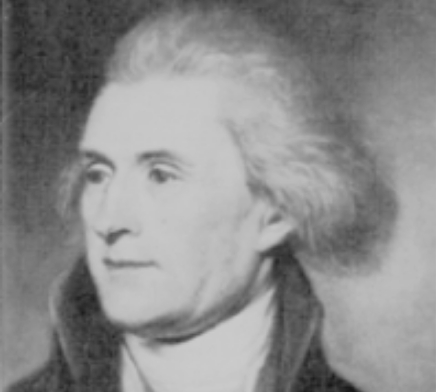
On this date in 1776, Thomas Jefferson’s “Declaration of Independence” was adopted, after a vote approving it on July 2. Its secular purpose was to “dissolve the political bands,” and it inaugurated the anti-biblical idea that “governments are instituted among men, deriving their just powers from the consent of the governed.” Jefferson was a Deist who was highly critical of Christianity, and whose revolutionary document made references to a “Nature’s God.”
—
Compiled by Annie Laurie Gaylor
© Freedom From Religion Foundation. All rights reserved.
Giuseppe Garibaldi
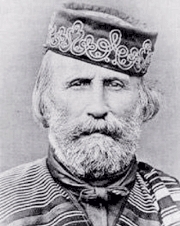
On this date in 1807, Giuseppe Garibaldi was born in Nice, France. Although his father wanted him to be a priest, Garibaldi set out to sea as a youth. He took part in the conspiracy of 1834, for which he was forced to flee from Italy. After adventurous travels, the famed Italian patriot took a major role in work to emancipate Italy from outside rule. After the failed revolution of 1848, he traveled to America. He returned with a band of revolutionaries in 1859, then again in 1862 and 1870. He was elected to the Italian Parliament in 1872. Garibaldi called the Vatican “the Sacred Shop” and rejected all creeds. D. 1882.
“Dear Friends, Man has created God; not God man. Yours ever, Garibaldi.”
— Garibaldi letter, 1880. Cited by Joseph McCabe in "A Biographical Dictionary of Modern Rationalists"
Compiled by Annie Laurie Gaylor
© Freedom From Religion Foundation. All rights reserved.
Kay Nolte Smith
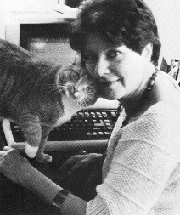
On this date in 1932, Kay Nolte Smith was born in Minnesota. She received her B.A. from the University of Minnesota in 1952 and her master’s degree in theater and speech from the University of Utah in 1955. She married Philip Smith in 1958. She and her husband went into professional theater, co-producing Ayn Rand’s “Penthouse Legend.” She made TV commercials, performed off Broadway for a decade, joined several faculties as a teacher, then turned her energies to writing. Her first novel, Watcher (1980), won the Edgar Allan Poe award, followed by Mindspell (1983), Country of the Heart (1988) and Tale of the Wind (1991). Mindspell delved into the colonial witch hunts.
After her research for Mindspell, Smith asserted that records of that heinous time should be “mandatory reading in every Sunday school. This is what made me an atheist. Consider how deeply witch craze was rooted in religion. The papal sanction was not abolished for six centuries. How can anyone belong to a church that treated its members this way?” (Feminist Connection interview, December 1983). D. 1993.
“The tragedy is that every brain cell devoted to belief in the supernatural is a brain cell one cannot use to make life richer or easier or happier.”
— Kay Nolte Smith, "Truth or Consequences," speech to the 1983 FFRF national convention
Compiled by Annie Laurie Gaylor
© Freedom From Religion Foundation. All rights reserved.
Stephen Foster
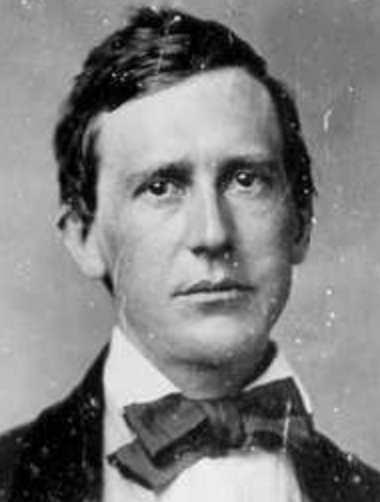
On this date in 1826, Stephen Collins Foster was born in Lawrenceville, Pa. Foster wrote the first great American popular songs and is remembered as the “father of American music.” He received little formal musical education and taught himself music composition and song writing. He was the first American songwriter to support himself from music sales, propelling the industry in its infancy. He produced a body of songs that have been remembered and sung longer than the works of any other American songwriters.
His most famous songs include “Oh Susanna,” “Camptown Races,” “Old Folks at Home,” and “My Old Kentucky Home.” Irving Berlin honored Foster by quoting part of “Swanee River” in his first hit, “Alexander’s Ragtime Band” (he had a picture of Foster on his office wall). George Gershwin paid him a similar tribute with his first hit song, “Swanee.”
Little is known of Foster’s inner religious views, but he lived and worked as if he were not a believer. A nonconformist, he never joined a church and rarely attended services. The songs that he chose to write of his own volition were purely secular. Toward the end of his life he accepted an assignment writing Sunday school songs. He hadn’t found God, but he had found a publisher. The songs were part of an endeavor to indoctrinate children with “catchy” music, sometimes setting religious words to secular melodies.
Foster married Jane Denny MacDowell in 1850 and they had one child together, Marion. Foster earned only small commissions on even his best-selling work and because there were no copyright laws, he never was given his fair share from publishers and died with only 38 cents in his pocket. (D. 1864)
Shameful rivalries of creed
Shall not make the martyr bleed,
In the good time coming.
Religion shall be shorn of pride,
And flourish all the stronger;
And Charity shall trim her lamp;
Wait a little longer.— Foster, “There’s a Good Time Coming” (1846)
Compiled by Sarah Eucalano from “The Good Atheist: Living a Purpose-Filled Life Without God” by Dan Barker (2011)
© Freedom From Religion Foundation. All rights reserved.
Christopher Cameron
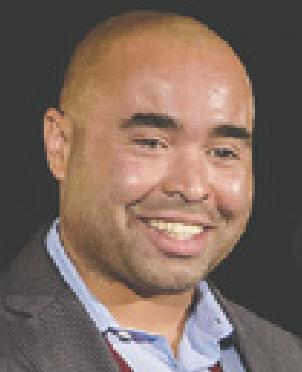
On this date in 1983, historian Christopher Cameron was born on a U.S. Army base in Heidelberg, Germany, where his mother Sylvie Cameron was stationed. The oldest of five children, he grew up primarily in New Hampshire, where his Catholic and French-Canadian family had migrated to in the early 1960s.
What little religious upbringing he had revolved mostly around attending midnight Mass on Christmas Eve or Mass on Easter. That changed soon after he was incarcerated in 2001 on multiple drug charges and he became a born-again Christian, although after release he rarely if ever attended church.
Studying the works of Jiddu Krishnamurti, Daniel Dennett, Richard Dawkins and other philosophers and secular writers during his years in graduate school led to his embrace of atheism. He received his B.A. in history from Keene State College in New Hampshire and his M.A. and Ph.D. in American history from the University of North Carolina at Chapel Hill.
Cameron is a scholar of atheism and freethought more broadly as well as being an atheist. As a professor of history at UNC-Charlotte, he teaches courses on freethought, American intellectual history and African American history. He was the founding president of the African American Intellectual History Society.
He’s the author of “To Plead Our Own Cause: African Americans in Massachusetts and the Making of the Antislavery Movement” (2014) and “Black Freethinkers: A History of African American Secularism” (2019). He co-edited “New Perspectives on the Black Intellectual Tradition” (2018) and “Race, Religion, and Black Lives Matter: Essays on a Moment and a Movement” (2021).
Cameron lives in Charlotte with his wife Shanice, his oldest child Cassidy and his twins Caleb and Callie. His speech to FFRF’s 2021 convention attendees is here.
“Despite views of Blacks as naturally religious, freethought has been a vital and significant component of Black culture and politics since the 19th century.”
— Cameron remarks at FFRF’s national convention in Boston (Nov. 20, 2021). Photo by Ingrid Laas.
Compiled by Bill Dunn
© Freedom From Religion Foundation. All rights reserved.
Jen Tullock
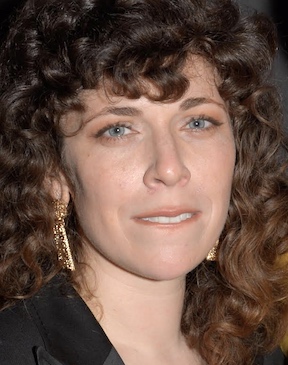
On this date in 1983, actress and writer Jennifer Leigh “Jen” Tullock was born in Louisville, Ky., to “fervidly Christian” parents involved in various aspects of the music industry, including education, performance and recording. As of 2025, Tullock had 34 acting credits listed on IMDb and 13 as writer or producer.
Growing up, she and her younger brother sang with their parents’ megachurch congregation. “To me, my mom was like Celine Dion because she was up there on the Jumbotron singing and was very charismatic and funny,” Tullock said. (New York Times, Oct. 9, 2025)
She and her brother also attended recording sessions and live shows, what she called “kind of a cool entryway to being on stage. I learned the value of why people feel connected to a live performance and I realized I wanted to make that a career.” (Towne Post Network, Oct. 19, 2022)
She attended the Christian Academy of Louisville before graduating from a public school and from Millikin University in 2006 with a bachelor of fine arts in acting. Millikin was founded in 1901 by a businessman in Decatur, Ill., and is affiliated with the Presbyterian Church-USA.
By the time she was 18, Tullock had experienced enough religion to know it wasn’t for her. She had developed a crush on her female translator on a Christian missionary trip to Ethiopia. “The leaders of both the megachurch and the evangelical school I went to talked about ‘homosexual sin’ as one might about mass murder,” she told a reporter. “My parents didn’t really want us to have exposure to secular culture. I went to evangelical school, so my formal education was through a biblical perspective. … As you might imagine, I did not do great on the SATs. They were like, ‘Well, she could read.’ ” (Ibid.)
“Even when I came out in the early aughts, it felt so different. I went to a liberal university, and was still told by the school counselor that he could not give me advice as a Christian, because I was gay. I remember hearing that and thinking, ‘This is not great for me.’ I didn’t have the language around why, I just knew that I was other, and because I was other, I was less than, and because I was less than, I needed to be quiet.” (Salon, March 20, 2023)
Tullock moved to New York City in 2007 to write, to perform in plays and improv and one-person shows and do commercials. Her short film “Partners” with Hannah Pearl Utt premiered at the 2016 Sundance Film Festival, where their feature “Before You Know It” premiered in 2019. Tullock had played all eight characters in Sam Benenati’s viral short film “Red Light” in 2018.
Her TV series roles in the remake of the legal drama “Perry Mason” and the psychological thriller “Severance” brought her critical acclaim and audience exposure, as did her contributing writer columns at the Huffington Post and appearances on the “Funny or Die” original interactive series. In 2020, she created Eggshellworld.com, a satirical collection of social media videos examining the fragility of suburban white women.
She married Marie Ronn, a Swedish creative director at Spotify who is four years her senior, at a New York private social club in 2023. Riley Berris received her ordination from the Universal Life Church to officiate. Ronn’s 9-year-old son Loa and his friend Ocean were the couple’s flower children.
In Tullock’s solo show “You Shall Inherit the Earth!” in 2024, she shared details of what was originally thought to be a transient ischemic attack (mini-stroke) the previous year. It was eerily similar to a scene in “Severance” in which her brother, played by Adam Scott, was felled by a stroke. “But what happened with mine was, after we’d done all of the tests, they figured out that I’d had a thing called a patent foramen ovale, a PFO, which is like a tiny hole between the chambers of your heart. And I also have a blood clotting disorder that I did not know about.” (Parade magazine, Feb. 21, 2025)
In “Nothing Can Take You From the Hand of God” (2025), co-written with Frank Winters and performed off-Broadway, Tullock further displayed her versatility by playing all 11 characters, the most notable a writer on a book tour whose experiences with Christianity were inspired by things Tullock encountered.
PHOTO: Tullock at the “Before You Know It” premiere in New York City in 2019; photo by Shutterstock/Ron Adar.
“My primary and only education was through a Christian lens. I was taught that my sole purpose in life was either to further God’s message on Earth or to be a housewife.”
— TheaterMania interview (Oct. 16, 2025)
Compiled by Bill Dunn
© Freedom From Religion Foundation. All rights reserved.