July 22
There are 6 entries:
Albert Brooks
Stephen Uhl
Tom Robbins
Steve Albini
Marci Hamilton
John Leguizamo
Tom Robbins
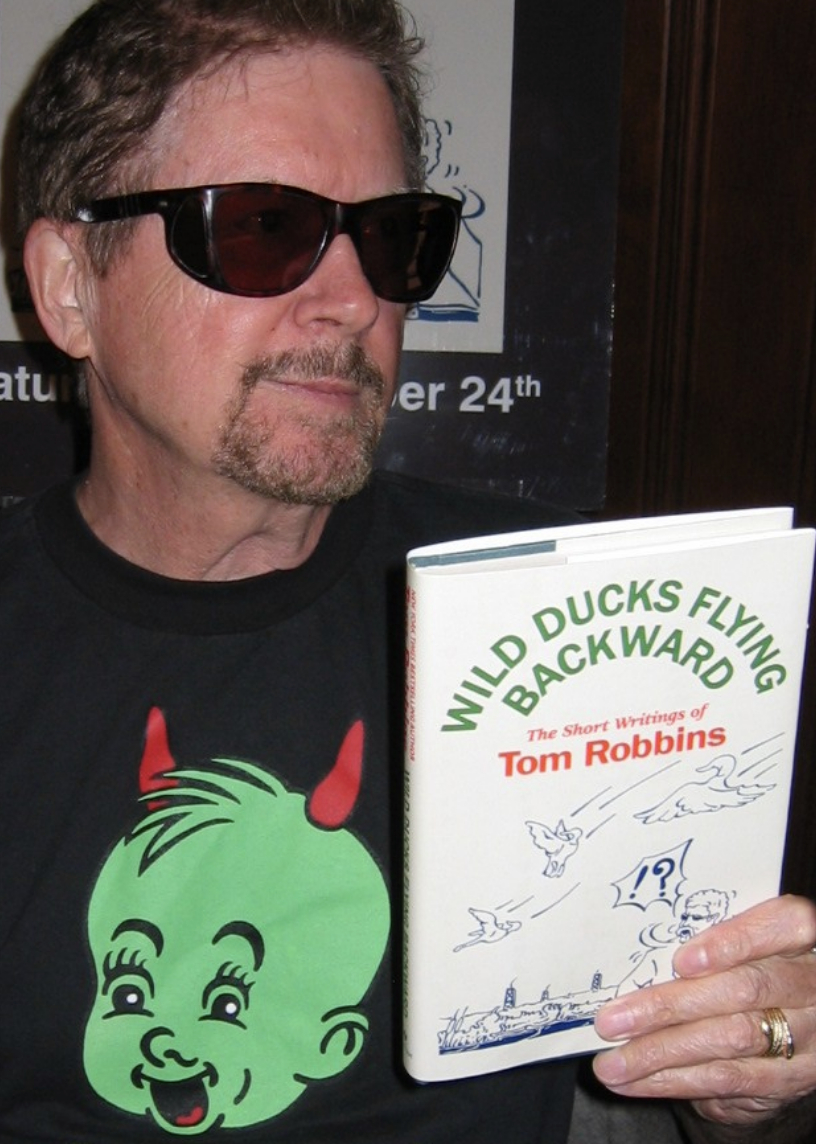
On this date in 1932, American novelist Thomas Eugene Robbins was born in Blowing Rock, North Carolina, and grew up in Richmond, Virginia. Both of his grandfathers were preachers, but he did not listen to sermons “by choice.” “As a kid I was exposed to snake handlers, gypsies, moonshiners, and eccentric old men who were great storytellers,” he later reminisced (Seattle Times, June 9, 2014).
He told National Public Radio that he began writing at age 5 (Aug. 28, 2010). He attended but did not graduate from college and spent three years in the Air Force, including a stint in Korea.
Upon discharge he studied at the Richmond Professional Institute (later Virginia Commonwealth University), where he became editor of the school newspaper and worked for the Richmond Times-Dispatch. After graduating with honors and pursuing a master’s, he moved to Seattle to attend the Far East Institute of the University of Washington, working as an art critic for the Seattle Times and hosting his own radio show at KRAB-FM.
His books include Another Roadside Attraction (1971), Even Cowgirls Get the Blues (1977), Still Life with Woodpecker (1980), Jitterbug Perfume (1984), Skinny Legs and All (1991), Half Asleep in Frog Pajamas (1994), Fierce Invalids Home from Hot Climates (2000), Villa Incognito (2003), Wild Ducks Flying Backward (2005), B is for Beer (2009) and a memoir, Tibetan Peach Pie ( 2014). His novella B Is for Beer was the basis for the 2018 album “B Is for Beer: The Musical.” His awards include being named among the 100 best writers of the 20th century by Writer’s Digest.
A private individual whose views appear to be irreverent but deistic, he has made references to religion in his novels. A character, Stubblefield, from Villa Incognito, says, “Soul is not even that Crackerjack prize that God and Satan scuffle over after the worms have all licked our bones. That’s why, when we ponder — as sooner or later each of us must — exactly what we ought to be doing about our soul, religion is the wrong, if conventional, place to turn. Religion is little more than a transaction in which troubled people trade their souls for temporary and wholly illusionary psychological comfort — the old give-it-up-in-order-to-save-it routine.”
Robbins was married several times and had three sons. He married Alexa d’Avalon, a yoga instructor, psychic and tarot reader in 1994. She was with him when he died at age 92 at their home in La Conner, Wash. (D. 2025)
Public domain photo: Robbins at a 2005 San Francisco reading.
“A sense of humor … is superior to any religion so devised.”
— Robbins, "Jitterbug Perfume" (1984)
Compiled by Annie Laurie Gaylor
© Freedom From Religion Foundation. All rights reserved.
Steve Albini
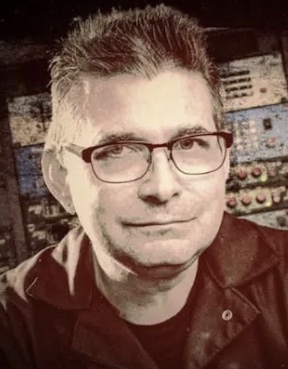
On this date in 1962, Steven Frank Albini was born in Pasadena, Calif., the youngest of three born to Gina and Frank Albini, high school sweehearts. He started playing bass guitar in high school and started writing about local punk rock bands after graduating from the Medill School of Journalism at Northwestern University. He founded and performed with the punk band Big Black and was guitarist and vocalist for the rock band Shellac starting in 1992.
Albini’s fame mostly came from his extensive work as a music producer. He produced over 1,000 albums and worked with numerous well-known artists such as Nirvana, Robert Plant, The Stooges, The Pixies and Cheap Trick. Albini was a unique producer in many ways. He preferred not to be credited for his work (or chose to be credited as a “recording engineer” rather than a producer) and not to receive royalties. He founded the Chicago recording studio Electrical Audio and appeared in the documentary “You Weren’t There: A History of Chicago Punk 1977-1984” (2007). Albini was also a chef who wrote a food blog.
“I’m an atheist,” Albini said in a 2011 interview with the website What I Wanna Know. “You could say that I’m agnostic, but that’s just a certain kind of atheist.” He continued, “If I were a gambling man I would put all my money on there not being anything other than this universe.”
Actually, he was a gambling man, his obituary said, noting the two World Series of Poker bracelets he won and his hosting of games at his home. He died unexpectedly in Chicago of a heart attack at age 61. Survivors included Heather Whinna, his wife of 16 years. (D. 2024)
“People use God to fill in the spaces in the gaps of their knowledge. … As we follow the trajectory of knowledge, the need for a God just dwindles, and it approaches zero.”
— Albini, interview with What I Wanna Know (June 4, 2011)
Compiled by Sabrina Gaylor and Bonnie Gutsch
© Freedom From Religion Foundation. All rights reserved.
Marci Hamilton
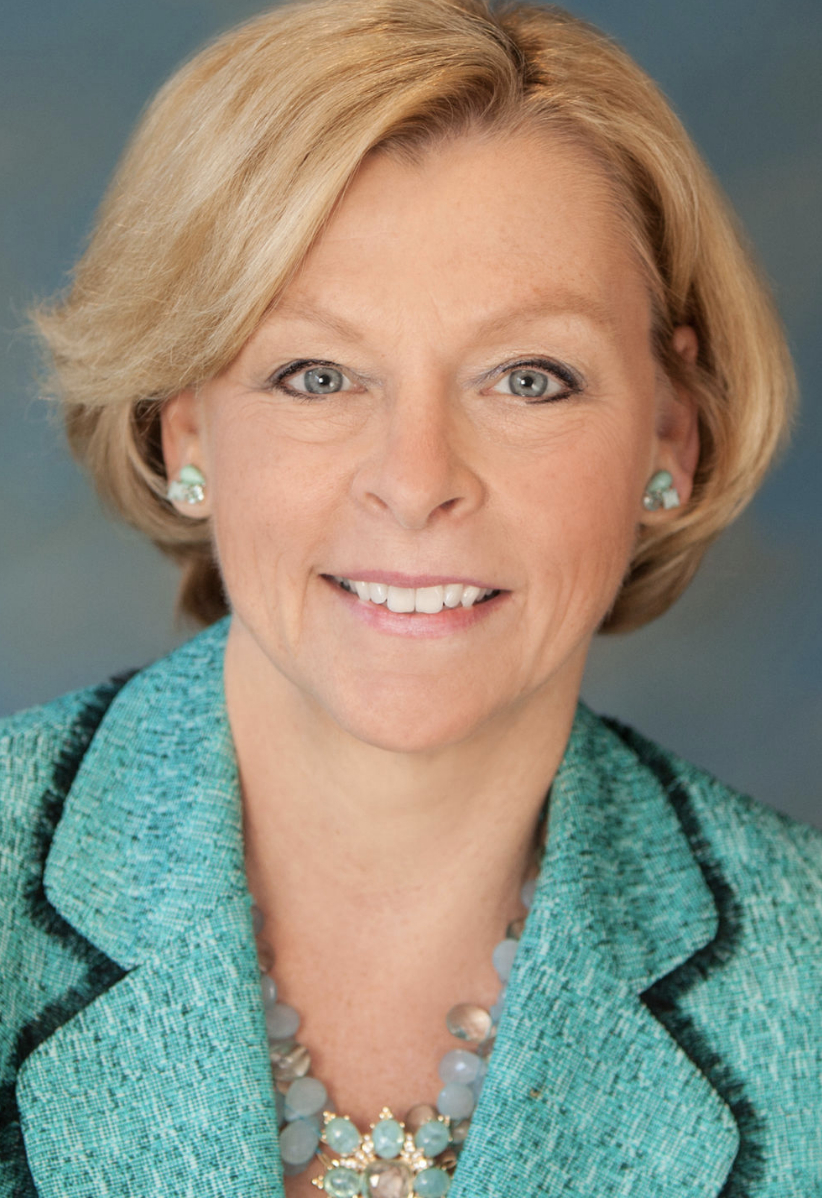
On this date in 1957, Marci Ann Hamilton — litigator, legal scholar, child protection advocate and opponent of “extreme religious liberty” — was born in Dallas, Texas, to Carol and Bill Hamilton, a stay-at-home mom and a sales representative for a national firm.
After earning a B.A. in philosophy and English from Vanderbilt University in 1979, she earned master’s degrees from Penn State University in those subjects in 1982 and 1984, the year she married Peter Kuzma, a Ph.D. organic chemist. Hamilton’s interest in the crossover between philosophy, theology and existentialism attracted her to the work of philosophers like Kierkegaard and Nietzsche.
She then earned a J.D. in 1988 from the University of Pennsylvania Law School, where she was editor-in-chief of the Law Review. She clerked for U.S. Supreme Court Justice Sandra Day O’Connor (one of her idols) and Judge Edward Becker of the 3rd Circuit U.S. Court of Appeals.
Hamilton is the Fels Institute of Government Professor of Practice and a Resident Senior Fellow in the Program for Research on Religion at the University of Pennsylvania. Previously she held the Paul R. Verkuil Chair in Public Law at the Cardozo School of Law at Yeshiva University in New York City. In 2016 she founded CHILD USA, a nonprofit academic think tank dedicated to improving laws and public policy to end child abuse and neglect.
She successfully challenged the constitutionality of the Religious Freedom Restoration Act (RFRA) at the Supreme Court in Boerne v. Flores (1997). She has represented numerous cities, neighborhoods and individuals dealing with state-church issues as well as claims under the Religious Land Use and Institutionalized Persons Act. Regarding Boerne (pronounced BUR-nee), Hamilton said, “I was essentially the only law professor in the country who was very publicly saying that extreme religious liberty was wrong. Most of the law professors were on the other side. (Omnia Magazine, University of Pennsylvania, May 21, 2020)
In the preface to God vs. the Gavel: The Perils of Extreme Religious Liberty (2014), a revision of Hamilton’s God vs. the Gavel: Religion and the Rule of Law (2005), she notes how after her Boerne victory (which Congress and states later got around by passing new RFRAs), she “was led on a journey into the underside of religion, because all the groups that lobby against religion sought me out. They earnestly and generously educated me about the facts of religiously motivated illegal behavior.”
Hamilton adds in the preface, “Ten years later, I am no longer shocked at the unacceptable behavior of too many believers, but I am even more determined that Americans learn about the dangers inherent in the religious liberty regime that was initiated in 1993 with the RFRA. The Framers called too much liberty ‘licentiousness.’ I simply call it extreme.”
In the Omnia interview, Hamilton said: “Working on all these issues on the opposite side of organized religion had never been part of any plan. My husband’s Catholic and I’m Presbyterian. We’re not atheists by a long shot. But when all the clergy sex abuse reporting started happening, I began getting calls from all over the country.”
She reached out to offer her help to plaintiffs’ attorney Jeff Anderson in 2011 in the wake of a Philadelphia grand jury report about clergy sex abuse. “I have a personal stake in this. My children are Catholic. My daughter was baptized by a pedophile priest. I have family pictures with a pedophile at one of the most important ceremonies of a child’s life. So I am in it, yes, in Philadelphia. Because it’s the only way to make this archdiocese do the right thing.” (Philadelphia Business Journal, March 27, 2013)
Hamilton has “profound contempt” for any institution or person covering up pedophilia or otherwise endangering children, e.g., denying them medical care due to religious beliefs. “I criticize the failure to protect children from sexual abuse wherever I see it, whether it is in a university, a private school or organization, or a public school. The whole culture needs to wake up and do better on this issue. The Catholic Church’s problem is that it is the largest institution in the world, and its victims have been coming out of the woodwork.” (Omnia, ibid.)
CHILD works to eliminate statutes of limitation so that abusers can be prosecuted no matter how long ago the crime occurred. Dozens of states have passed Child Victim Acts to enable that. Hamilton and co-counsel made history in March 2020 when they filed the first two lawsuits against the Church of Scientology for child sex abuse.
She received the 2015 Religious Liberty Award from the American Humanist Association and was the recipient in 2014 of FFRF’s Freethought Heroine Award. Her acceptance speech titled “Extreme Religious Liberty Is Tyranny” can be viewed or read here. Hamilton also wrote FFRF’s amicus brief before the Supreme Court in the Hobby Lobby challenge of the Affordable Care Act’s contraceptive mandate.
“The ‘Restoration’ in the title is a lie. It was not restoring anything that had been in place before. It was putting in place what the religious litigants had failed to obtain for years.”
— Hamilton, referring to the Religious Freedom Restoration Act, FFRF convention speech (Los Angeles, Oct. 24, 2014)
Compiled by Bill Dunn; photo courtesy of Marci Hamilton under CC 3.0.
© Freedom From Religion Foundation. All rights reserved.
John Leguizamo
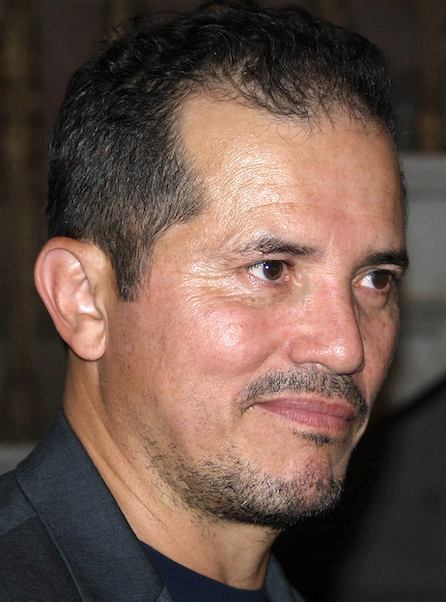
On this date in 1964, actor John Alberto Leguizamo was born in Bogotá, Colombia, to Alberto and Luz Leguizamo. The family emigrated to New York City when he was 4. In high school he was voted “most talkative” by classmates. He left NYU’s Tisch School of the Arts to pursue stand-up comedy and made his TV debut in 1986 on “Miami Vice.”
Other early roles were as a friend of Madonna’s boyfriend in her “Borderline” video (1984), a terrorist in “Die Hard 2” (1990), a robber in “Regarding Henry” (1991) and as Luigi Mario in the 1993 adventure comedy “Super Mario Bros.” That same year he had a prominent role in Brian De Palma’s “Carlito’s Way,” which boosted his career in serious roles.
Leguizamo had other numerous roles in the 1990s, including a star turn as a drag queen in “To Wong Foo, Thanks for Everything! Julie Newmar” (1995), for which he received a Golden Globe Nomination for Best Supporting Actor. To promote the Baz Luhrmann movie “Moulin Rouge!” (2001), he appeared on a celebrity edition of the U.S. version of “Who Wants to Be a Millionaire?” with Kelly Ripa, Martin Short and Chevy Chase. In 2008, he co-starred in “The Happening,” written and directed by M. Night Shyamalan.
He hit the stage with his Obie-winning “John Leguizamo: Mambo Mouth” (1991), in which he portrayed seven different Latino characters. He made his Broadway debut in “John Leguizamo: Freak” (1998), a one-man show filmed for HBO by Spike Lee. In 2011 he opened his semi-autobiographical, one-man show “Ghetto Klown” on Broadway. His memoir Pimps, Hos, Playa Hatas and All the Rest of My Hollywood Friends: My Life, was published in 2006.
He hosted the 2018 Obie Awards and directed and starred in “Critical Thinking” (2020), based on a 1998 true story about five LatinX and Black teens from the Miami ghetto who make it to the National Chess Championship. He co-founded NGL Collective, a digital media company based in New York that helps clients reach the Hispanic market. “Last year, Latinx people were 3 percent of the faces in front of the camera and behind the camera,” he told Hispanic Executive. (9-11-20)
Leguizamo married actress Yelba Osorio in 1994. They divorced in 1996. He married Justine Maurer, a costumer working on “Carlito’s Way,” in 2003. They have a daughter, Allegra Sky (b. 1999), and a son, Ryder Lee (b. 2000). They were the flower girl and ring bearer at their parents’ wedding.
On “Real Time With Bill Maher” (Oct. 16, 2020), Leguizamo described himself as “godless.” Asked by The Onion A.V. Club if there’s a God, he said, “Yeah, but there’s not just one God. There’s a whole lot of gods, because one God couldn’t have possibly made so many mistakes all by Himself. This had to be done by committee.” (Oct. 9, 2002)
“I’m a recovering Catholic.”
— Leguizamo tweet, responding to one that asked if he's Catholic like most Latinos. (Twitter, Jan. 31, 2018)
Compiled by Bill Dunn
© Freedom From Religion Foundation. All rights reserved.
Stephen Uhl
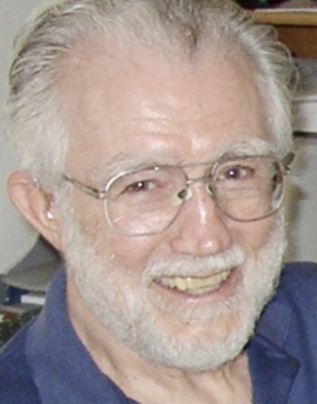
On this date in 1930, psychologist and author Stephen Frederick Uhl was born to Catherine (Gettlefinger) and Justin Uhl on a farm near near Bradford, Ind., where they raised nine children. First were born four daughters: Juanita, Frances, Joan and Roma. Five sons followed: Carl, Stephen, Ray, Jude and John.
Income from the 75-acre farm during the Depression strapped the family financially but raising livestock and planting a large vegetable garden kept everyone fed. Weekly Catholic Mass attendance, particularly at Catherine’s behest, was required.
Despite the financial burden, at age 14 Uhl entered the boarding seminary at St. Meinrad Archabbey, a Swiss order of Benedictine monks in Indiana. After further seminary studies, 12 years all told, he was ordained in 1956 as a priest, after which he continued his schooling at Catholic University in Washington, D.C.
His vocation was not destined to last. “My doubts about religion started … one morning in the monastery chapel in 1964 when I was 34 and was meditating on the intellectual proofs of God’s existence. I had a ‘lightning bolt’ insight in which I clearly saw how St. Thomas Aquinas’ supposedly strongest proof (his causality proof) fell far short, because it was based on an unwarranted assumption.” (Freethought Today, March 2011)
He left the priesthood in 1967 after 11 years. After shedding the clerical garb, he earned a Ph.D. in psychology from Loyola University in Chicago and married Diane Suckow on the Winter Solstice 18 months later in 1968. He taught public high school math, became a certified school psychologist and opened a private psychology practice in 1976 from which he eventually retired.
In his memoir “Out of God’s Closet” (2009), Uhl wrote about his transition from priest to atheist: “The superstitions learned in early childhood came into conflict with my adult learnings. The common sense I had learned from my father (a farmer) drove me to follow my reasoning conscience and break the bonds of traditional superstition.”
He added: “It was not any sense of guilt that drove me to undo the fallacies and superstitions that I had taught so effectively as a naïve young priest. It was more a sense of responsibility for mopping up after my earlier mistakes.”
The Uhls joined the Freedom From Religion Foundation as members in 1999 and became major benefactors, contributing well over a million dollars to various FFRF fundraisers, including $250,000 to build a headquarters addition in Madison, Wis.
In a member profile, Uhl wrote that some of his least favorite things were “Jesus-loving Christians who hate and terrorize atheists; a pope theoretically representing over a billion people taking medieval, anti-scientific stances, especially on birth control and stem cell research; the hypocrisy of ‘preying’ clergy; the inhumane waste in our penal system that overstresses vengeful punishment (of the ‘sinner’) and witnessing a ‘smart’ President Obama preaching a religious sermon at a National Prayer Breakfast.”
He was diagnosed with prostate cancer in 2009 but lived 12 more years before the cancer returned when he was 90. He chose to begin VSED (Voluntarily Stopping Eating and Drinking) and died a week later with his wife by his side at their home in Oro Valley, Ariz. They had decided early on in their marriage not to have children. Diane died the next year in 2022.
His uncle “left a legacy of warmth, fun, intelligence, education and generosity,” wrote Greg Uhl, one of his 31 nieces and nephews. “He embodied his and Aunt Diane’s motto of ‘Live Long and Die Short.’ ” (D. 2021)
“Religion is regarded by the common people as true, by the wise as false, and by the rulers as useful.”
— A quote by the Roman philosopher Seneca that Uhl embraced (Freethought Today, March 2011)
Compiled by Bill Dunn
© Freedom From Religion Foundation. All rights reserved.
Albert Brooks
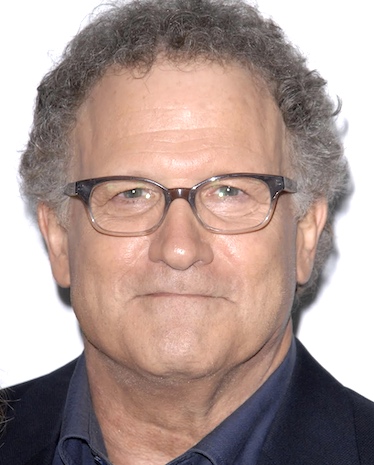
On this date in 1947, actor and comedian Albert Brooks (né Albert Lawrence Einstein) was born to show business parents in Beverly Hills, Calif. His grandparents were Russian and Austrian Jewish immigrants. His actress mother Thelma Goodman performed as Thelma Leeds, and his father Harry Einstein, who died when Brooks was 11, was a comedian who often performed as “Parkyakarkus,” a Greek immigrant.
His best friends at Beverly High were Joey Bishop’s son Larry and Rob Reiner. He dropped out of college after a year to focus on his comedy career and changed his professional name to Albert Brooks, joking that “the real Albert Einstein changed his name to sound more intelligent.”
Brooks gained exposure on variety and talk shows in the late 1960s and early 1970s, including appearances on “The Tonight Show Starring Johnny Carson.” He recorded two successful albums before deciding to try his hand at making short films. He directed six of them for the first season of NBC’s “Saturday Night Live.”
His first mainstream film role was in Martin Scorsese’s “Taxi Driver” (1976). He directed his first feature film, “Real Life,” in 1979, with co-writer Harry Shearer. A sendup of the PBS documentary “An American Family,” it’s seen as foretelling the emergence of reality TV. He also appeared in “Private Benjamin” (1980), starring Goldie Hawn.
Brooks co-wrote, directed and starred in the 1980s and 1990s in comedies depicting his neurotic and self-obsessed character such as “Modern Romance” (1981) and “Lost in America” (1985). In “Defending Your Life” co-starring Meryl Streep (1991), he plays a character in the afterlife put on trial to defend his life and determine if he’ll be reincarnated on Earth.
“Brooks doesn’t believe in immortality, in life or on film,” later wrote Adrienne LaFrance, The Atlantic executive editor. “Plenty of writers and directors fool themselves into believing that what they make will last forever.” (The Atlantic, June 2024) Astrophysicist Neil deGrasse Tyson called “Defending Your Life” one of “the most insightful things” he’s ever seen. (Kveller, Jan. 4, 2024)
Brooks garnered positive reviews for “Mother” (1996), portraying a middle-aged writer moving back home to resolve tensions between himself and his mother, played by Debbie Reynolds. There was no such tension between him and his mother, who lived to be 95. He had numerous film and TV screen voice-over roles, including the film “Finding Nemo” (2001) and seven on “The Simpsons,” including the villain Hank Scorpio.
Brooks was a bachelor until he and artist Kimberly Shlain married in 1997. They have a son Jacob and daughter Claire. Interestingly, in an interview asking him when he got married, Brooks replied “in my 40s.” He was technically correct, being four months shy of his 50th birthday.
The last movie he made, 2005’s “Looking for Comedy in the Muslim World,” wasn’t widely released and received mixed reviews. Reiner directed the documentary “Albert Brooks: Defending My Life” that was released in 2023 on Max. It includes interviews with entertainment colleagues such as Sarah Silverman and Larry David.
PHOTO: Brooks at Grauman’s Chinese Theatre in 2012 in Hollywood, Calif.; Shutterstock.com photo by Kathy Hutchins
“We know meditation is healthy. Everybody says it slows your heart rate and everything, and the basis of religion seems to be that when you pray — I don’t know what people who are religious think when they pray, but it’s very close to what meditation is. It’s sort of ritualistic, it’s habit, it’s like exercising, so you might be able to get something out of that. I’m sure some people enjoy thinking it’s out of their hands. There’s all these people who think it’s ‘meant to be.’ But I don’t buy that.”
— Brooks replying to whether he's at all religious, Vanity Fair interview (Dec. 17, 2012)
Compiled by Bill Dunn
© Freedom From Religion Foundation. All rights reserved.