December 19
Richard Leakey
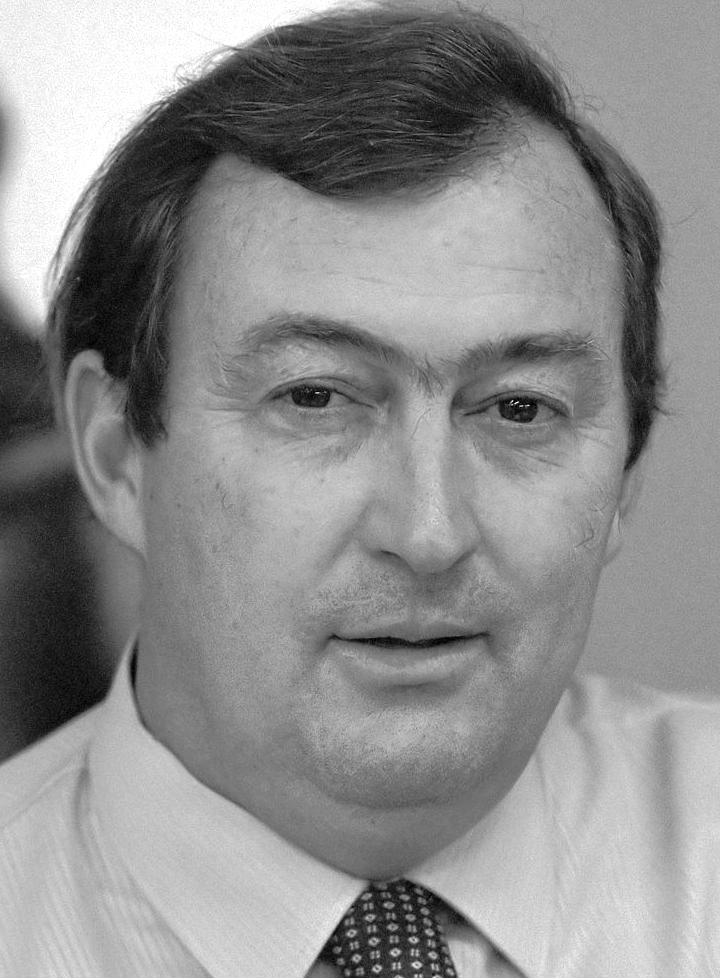
On this date in 1944, Richard Erskine Frere Leakey was born in Nairobi, Kenya, to the famous archaeologists Louis and Mary Leakey. As a child, Leakey accompanied his family on archaeological expeditions and discovered his first fossil when he was 5. After dropping out of high school when he was 16, Leakey entertained various careers such as leading safaris, but ultimately chose to follow in his parents’ footsteps, becoming an accomplished paleoanthropologist.
His achievements included finding the full skeleton of a 1.6 million-year-old Homo erectus known as “Turkana Boy” and co-discovering in 1972 the “Black Skull” (also known as “1470”), the earliest australopithecine fossil discovered to date. He also wrote numerous books, including Origins, co-written with Roger Lewin (1977), The Making of Mankind (1981), Origins Reconsidered (with Lewin, 1992), The Sixth Extinction (with Lewin, 1995) and Wildlife Wars: My Fight to Save Africa’s Natural Treasures (with Virginia Morell, 2001).
Caned in school as a child for missing chapel, he vowed to never become Christian. “I didn’t ever have religion,” Leakey said during an interview with the Academy of Achievement on June 21, 2017. Since his uncle was the Anglican archbishop of East Africa, Leakey’s professed atheism didn’t sit well with some of his family, friends and teachers.
In the early 1960s he started a trapping and skeleton supply business with Kamoya Kimeu, soon expanding it into photographic safaris. He made his first forays into paleoanthropology and met archaeologist Margaret Cropper. In 1965 they married but divorced in 1969 after having a daughter, Anna. He married zoologist Meave Epps in 1970 and they had two daughters: Louise, also a paleoanthropologist, and Samira.
He worked with his father at the Centre for Prehistory and Palaeontology but differences led Leakey in a different direction. With others he started working to “Kenyanise” the National Museum. Over the next decade he took part in expeditions that made a number of stunning archaeological discoveries. In 1990 he was appointed the first chairman of the Kenya Wildlife Service and spearheaded efforts to stop elephant poaching. A plane he was piloting crashed in 1993 and both his legs had to be amputated. He told President Daniel Arap Moi, a religious man, not to pray for him. (Interview in The Humanist, June 29, 2012)
Leakey left Kenya in 2002 to teach anthropology at Stony Brook University in New York and chair the Turkana Basin Institute. He was appointed in 2007 as interim chairman of Transparency International’s Kenya branch and was elected a Fellow of the Royal Society. In 2013 he received the Isaac Asimov Science Award from the American Humanist Association. President Uhuru Kenyatta appointed Leakey chairman of the board of the Kenya Wildlife Service in 2015.
In a 2010 interview with Richard Dawkins for the 2008 documentary “The Genius of Charles Darwin,” Leakey said, “Surely, [evolution] should be the pride and joy of African leaders. But the faith brigade, whether they’re evangelical Christians, whether they’re conservative Catholics, whether they’re Islamic fundamentalists, are quite worried about this concept and are trying desperately to persuade ongoing future generations to have nothing to do with it.”
He died in Kenya of undisclosed causes 14 days after his 77th birthday. (D. 2022)
PHOTO: Leakey in 1986. Rob Bogaerts/Anefo photo. CC 4.0
“I myself do not believe in a god who has or had a human form and to whom I owe my existence. I believe it is man who created God in his image and not the other way round.”
— Leakey, "One Life: An Autobiography" (1983)
Compiled by Sabrina Gaylor and Bill Dunn
© Freedom From Religion Foundation. All rights reserved.
Robert Sherman
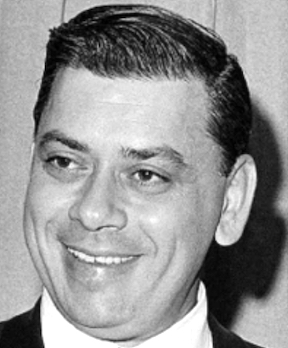
On this date in 1925, songwriter Robert Bernard “Moose” Sherman — who coined the 34-letter word “Supercalifragilisticexpialidocious” for the film “Mary Poppins” — was born in New York City to Rosa and Avrum “Al” Sherman. Robert’s brother Richard, three years younger, typically composed the music while Robert wrote the lyrics after they later teamed up.
Al Sherman was born in Kiev, then in the Russian Empire, into a musical Jewish family and moved with them in 1909 to New York, where he organized and led a small orchestra and worked alongside George Gershwin and Vincent Youmans. He married the actress Rosa Dancis when he was 26. He rose to become one of Tin Pan Alley’s most sought after songwriters in the vaudeville era, with stars like Rudy Valee and Eddie Cantor recording his songs.
The family’s peripatetic lifestyle for several years stopped in California in 1937. At Beverly Hills High School, he took violin and piano and wrote and produced radio and stage programs. He joined the U.S. Army at age 17 and in 1945 was with the troops that liberated the Dachau concentration camp, the horrific images of which he was never able to erase from his mind. He had been shot in the knee earlier, a wound that forced him to walk with a cane for the rest of his life.
He enrolled at Bard College in Annandale-on-Hudson, N.Y., where he edited the campus newspaper, wrote two novels and graduated in 1949, majoring in English and painting. He and Richard started writing songs after a challenge by their father and founded Music World Corp. to publish them. In 1959, their first Top Ten hit was “Tall Paul” by Annette Funicello, a Disney Mouseketeer and budding teen heartthrob.
The song’s success attracted Walt Disney, who hired the Shermans to write for his studio. “It’s a Small World (After All)” became the most translated and performed song on Earth. The brothers won two Academy Awards for “Mary Poppins” (1964). Their numerous other Disney and non-Disney top box office film credits include “The Jungle Book” (1967), “The Parent Trap” (1961 and 1998), “The Aristocats” (1970), “Bedknobs and Broomsticks” (1971), “Charlotte’s Web (1973), “The Many Adventures of Winnie the Pooh” (1977) and “Little Nemo: Adventures in Slumberland (1989).
The Shermans were eclectic in their prolific composing of over 200 works, using diverse influences from Tin Pan Alley, jazz, Dixieland, barbershop, blues, tango, parlor songs and even operetta. “Richard wrote more of the music and sat at the piano, but there were porous boundaries between lyricist and composer.” (The Conversation, May 28, 2024)
After his marriage in 1948 to Ilse Hayes that was annulled in 1950, Sherman married Joyce Sasner in 1953 and they were together until her death in 2001. He moved from Beverly Hills to London the year after she died. They had four children: Laurie Shane (b. 1955), Jeffrey Craig (b. 1957), Andrea Tracy (b. 1960) and Robert Jason (b. 1968).
He and Richard were awarded a star on the Hollywood Walk of Fame and in 2005 were elected to the Songwriters Hall of Fame. They were estranged in other aspects of their lives, however, due to personality and professional differences.
When asked if Judaism was practiced in his home, Robert’s son Jeffery said: “Mom was more religious [while I was] growing up than Dad. I shared that with her. Dad honestly stopped believing there could be a God after he witnessed what he did liberating Dachau. He loved the Jewish traditions and culture though.” (Jewish Journal June 19, 2024)
Sherman died in London at age 86. His son Robbie edited Sherman’s autobiography “Moose: Chapters From My Life” and published it posthumously in 2013. (D. 2012)
“I’m not exactly what you would call a religious man. Like so many of us who saw the war and the camps close up, I too have difficulty reconciling how a benevolent God could allow such horrors to occur.”
— Sherman, who said while he called himself an atheist when younger, he had softened that stance over time. ("Moose: Chapters From My Life")
Compiled by Bill Dunn
© Freedom From Religion Foundation. All rights reserved.