December 17
Frances Hamerstrom
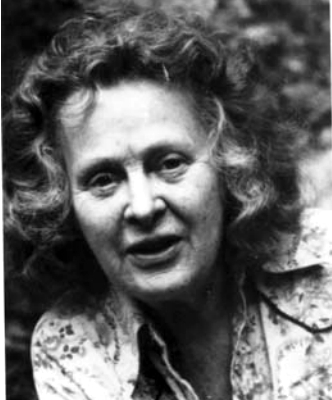
On this date in 1907, biologist Frances “Fran” Hamerstrom, née Frances Carnes Flint, was born into a wealthy family in Needham, Mass. After her tutoring, horseback-riding and lacemaking lessons, she sought refuge with wild animals, usually injured animals neighborhood kids brought her. Rebellious and a bit of a tomboy, she dropped out of Smith College and embarked on a short career as a fashion model in the late 1920s. After meeting Frederick Hamerstrom at a Dartmouth prom and marrying him, she returned to college. Frederick, known as “Hammy,” was a nephew of Clarence Darrow.
Hamerstrom earned a biology degree from Iowa State College in 1935. Then she and her husband worked on advanced degrees under Aldo Leopold in Wisconsin. She was the only woman to earn a graduate degree under Leopold and the first woman to train a golden eagle. The state of Montana offered the pair a job as biologists but told her she would be called a secretary — “and they’d pay me like a secretary,” she said. Instead they accepted an offer to research the near-extinct prairie chicken in Wisconsin.
While raising two children, they developed a management system of land patterning. To reach out to the public, she wrote Strictly for the Chickens. Her other books included An Eagle to the Sky and the children’s books Walk When the Moon Is Full and Adventure of the Stone Man. She also wrote Birding With a Purpose and My Double Life: Memoirs of a Naturalist (1994).
As parents, they had two rules: “No chewing gum, and no church.” Speaking of their 55-year marriage, she quipped, “You’ll notice that our ‘pair bond’ has lasted fairly well and I think it’s because we’re both remarkably tolerant people. He’s an agnostic and I’m an atheist, and we’ve put up with each other all this time!”
Hamerstrom was critical of “the Christian mentality … that one isn’t supposed to learn from animals. One is more or less supposed to look down on them, manage them, use them, but not learn from them.”
Following Frederick’s death in 1990, she visited Saudi Arabia, Africa and South America. On an expedition in Peru at age 86, she broke her hip and was evacuated by helicopter. She died at age 91 at a nursing home in Port Edwards, Wis. Both the Hamerstroms were inducted into the Wisconsin Conservation Hall of Fame in 1996. (D. 1998)
“When I was 8 years old, I tried prayer. And it didn’t work!”
— Hamerstrom comment during her address to FFRF's 1986 national convention
Compiled by Annie Laurie Gaylor
© Freedom From Religion Foundation. All rights reserved.
Marquise du Châtelet
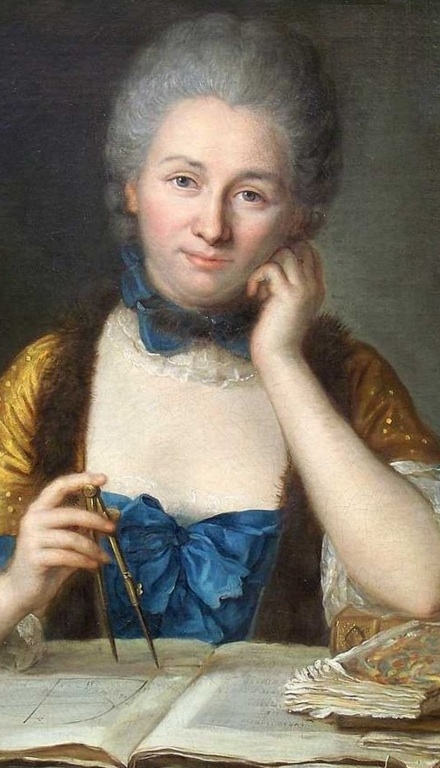
On this date in 1706, Gabrielle Émilie Le Tonnelier de Breteuil, later known as Marquise du Châtelet, was born in Paris. The daughter of the Baron de Breteuil, she showed great aptitude and was given broad latitude to study. Émilie was translating Virgil by age 16. She married Marquis Florent du Chastellet in 1725 when she was 18 and he was 34. They had three children before theirs became a marriage in name only (basically an arranged marriage in the first place), although she resisted any idea of divorce. One of their sons was imprisoned and guillotined in 1793 at age 66.
Living a social life in Paris, Émilie met Voltaire. He became her longtime companion under the eyes of her tolerant husband. Voltaire changed the spelling of her name to Châtelet. When Voltaire was facing arrest, they went to live at her husband’s country estate at Cirey, where they engaged in some of their most productive years of work and were known for working day and night. Emilie wrote treatises on mathematics, physics and philosophy.
She is best-known in France for translating Newton’s Principia, which, as the only French translation of that work, was reprinted in 1966. Her philosophical magnum opus, Institutions de Physique (Foundations of Physics), was published in 1740 and was soon translated into several other languages. Posthumously, her ideas were heavily represented in the most famous text of the French Enlightenment, the Encyclopédie of Denis Diderot and Jean le Rond D’Alembert, published shortly after her death.
Du Châtelet began an affair with the poet Jean François de Saint-Lambert in 1748 and gave birth to their daughter, Stanislas-Adélaïde, on Sept. 4, 1749. Du Châtelet died six days later from a pulmonary embolism. She was 42. Her daughter died 20 months later. Du Châtelet had dedicated her Deistic manuscript, Doubts About Revealed Religion, which was posthumously published in 1792, to Voltaire. (D. 1749)
IMAGE: Du Châtelet in a painting by Maurice Quentin de La Tour.
Compiled by Annie Laurie Gaylor
© Freedom From Religion Foundation. All rights reserved.
Kerry Packer
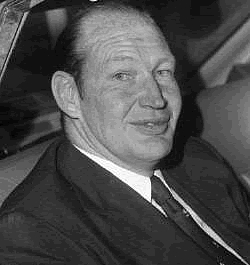
On this date in 1937, business tycoon Kerry Francis Bullmore Packer was born in Sydney, Australia. His father was the wealthy Sir Frank Packer, an influential figure in publishing and broadcasting. After his father’s death in 1974, Packer inherited his media holdings and became head of the Australian Consolidated Press (1974–2005), chairman of Publishing and Broadcasting Limited and owner of Channel Nine.
In 1977 he founded World Series Cricket, an independent cricket competition televised on Channel Nine, which provided higher salaries for players and changed the way cricket was played for television. He married Roslyn Redman Weedon in 1963 and they had two children, James and Gretel.
In 1990, during the Australian Open polo championship, he suffered the first of several heart attacks and was left clinically dead for six minutes before being revived. “Believe me, there is nothing on the other side. I’ve been there,” Packer said of his experience (quoted in a BBC News story on Dec. 27, 2005). He then paid to furnish every ambulance in New South Wales with portable defibrillators, which soon became known as Packerwhackers.
He died of kidney failure nine days after his 68th birthday. He had instructed his doctors not to prolong his life with dialysis and that he wanted to “die with dignity.” His private funeral service was held at his country estate. (D. 2005)
“The good news is there’s no devil. The bad news is there’s no heaven. There’s nothing.”
— Packer, speaking about the time he spent clinically dead, quoted in his Reuters obituary (Dec. 27, 2005)
Compiled by Sabrina Gaylor
© Freedom From Religion Foundation. All rights reserved.
Rian Johnson
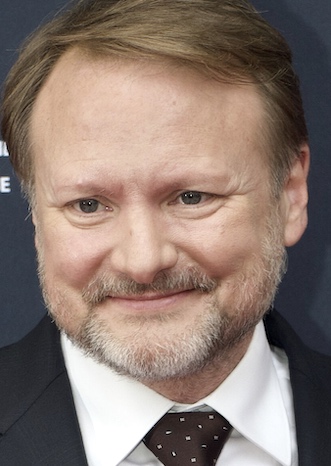
On this date in 1973, filmmaker Rian Johnson was born in Silver Spring, Md., to parents who operated a homebuilding business and were movie buffs. His father was also a frustrated scriptwriter who was never able to sell a script. The family moved to Denver and then to San Clemente, Calif., where Johnson graduated from high school. He estimated he’d made over 90 short films by then with a Super 8mm camera.
Woody Allen’s “Annie Hall” (1977) inspired his goal to direct movies and he enrolled in the University of Southern California’s School of Cinematic Arts, graduating in 1996. It took him nine years to make his first feature, “Brick” (2005), while he made promos for children’s TV shows and instructional videos for the deaf and worked as a film editor. “Brick” reimagined a contemporary high school as the setting for a Dashiell Hammett-style mystery.
“The Brothers Bloom” (2009), his next feature, was critically acclaimed and followed by directing three TV episodes of “Breaking Bad.” He wrote and directed “Star Wars: The Last Jedi” (2017), that year’s highest grossing film.
Johnson wrote and directed “Knives Out” (2019), “Glass Onion” (2022) and “Wake Up Dead Man” (2025), all starring atheist Daniel Craig as Benoit Blanc, a Southern sleuth in a trilogy described as “masterfully twisty, broadly comic whodunits populated by tech billionaires, venal politicians, fashionistas and spoiled old-money family members.” (Religion News Service, Nov. 25, 2025)
The trilogy is steeped in religion. Johnson set “Wake Up Dead Man,” for example, in Catholicism instead of his Protestant tradition because his childhood churches “all kind of looked like Pottery Barns” while a Catholic setting felt “exotic,” “a little bit scary” and “awe inspiring.” (Ibid.)
“I grew up very Christian. I’m not anymore, but when I was a teenager into my mid-twenties, I framed the world around me through the lens of my relationship with Christ. It was a very important part of my life, so I have a lot of complicated feelings about all of it. … I have strong feelings about faith: both my own personal experience and how it intersects with our country’s cultural and civic life, and the ways that intersection touches all of us differently.” (Tudum by Netflix, Dec. 17, 2025)
The late composer Stephen Sondheim is a major inspiration for Johnson, who “sneaks him in anywhere I can.” In “Knives Out,” Craig sings along to Sondheim’s “Losing My Mind” from “Follies,” which Johnson was listening to while writing. Sondheim, who was known for hosting elaborate murder mystery parties, had a cameo in “Glass Onion” in which he is playing the game Among Us with Angela Lansbury, Kareem Abdul-Jabbar and Natasha Lyonne. (Reddit, Jan. 5, 2020)
Johnson married film critic and historian Karina Longworth in 2018. They met in 2008 after a screening of “The Brothers Bloom” in New Jersey.
PHOTO: Johnson at the premiere of “Wake Up Dead Man” in 2025 at the Toronto Film Festival; photo by Max Surprenant under CC 4.0.
“I don’t know if I classify myself as atheist. I would say I’m just nonreligious. I’m not a Christian anymore.”
— Interview, Religion News Service ( Nov. 25, 2025)
Compiled by Bill Dunn
© Freedom From Religion Foundation. All rights reserved.