January 9
Dave Matthews
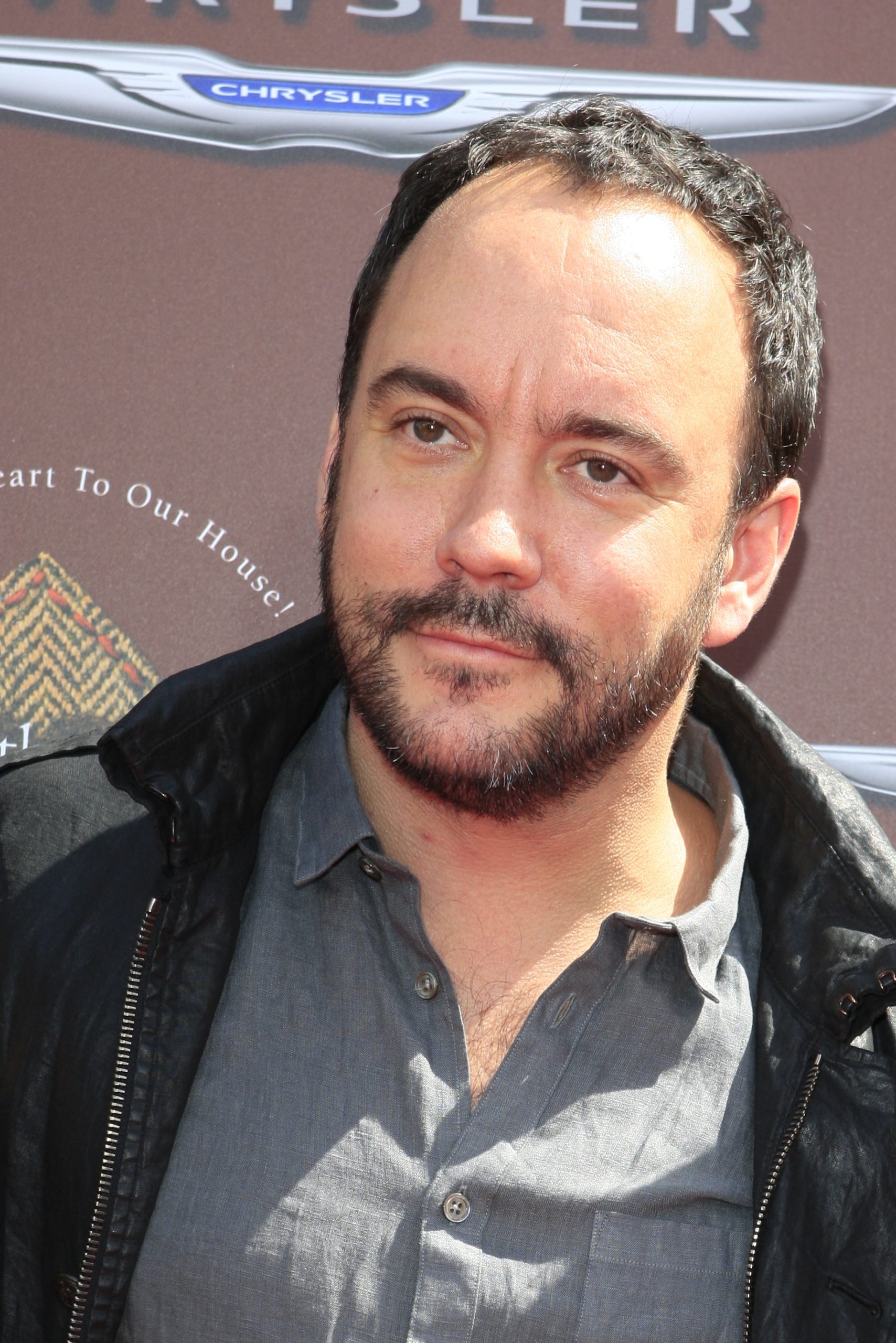
On this date in 1967, David John Matthews was born in Johannesburg, South Africa. After high school he moved to the United States to avoid mandatory service in the South African Army. He moved to Charlottesville, Va., in 1986, where he began to hone his musical talents by playing guitar and singing on stage. In 1991 he formed the Dave Matthews Band, a rock group with jazz influences, along with Carter Beauford, LeRoi Moore, Steffan Lessard, Peter Griesar and Boyd Tinsley.
The Dave Matthews Band has recorded nine studio albums as of this writing and continues to tour extensively. The latest is “Come Tomorrow” (2018). Several live albums have also been released and Matthews released his solo album “Some Devil” in 2003. He and his wife Ashley were married in 2000 and have three children: twins Stella Busina and Grace Ann, born in 2001, and August, born in 2007.
Matthews was raised Quaker but lost his faith in his teens after struggling with the idea that most of his loved ones, including his father, would end up in hell. “It would be safe to say that I’m agnostic,” Matthews said in a 2001 Boston Globe article. He elaborated on his agnostic beliefs in an Oct. 4, 2009 Q TV interview: “I can’t believe, in any way, in a god that cares about me. That makes no sense to me, a god that’s watching me and hoping that I make the right choices. That god is impossible.”
“We owe a faith to the world and to ourselves. We owe a grace and gratitude to things that have brought us here. But I think it’s very ignorant to say, ‘Well, for everything, God has a plan.’ That’s like an excuse. Maybe the real faithful act is to commit to something, to take action, as opposed to saying, ‘Well, everything is in the hand of God.’ ”
— Matthews, Boston Globe interview (March 4, 2001)
Compiled by Sabrina Gaylor; photo by Helga Esteb, Shutterstock.com
© Freedom From Religion Foundation. All rights reserved.
Linda Greenhouse
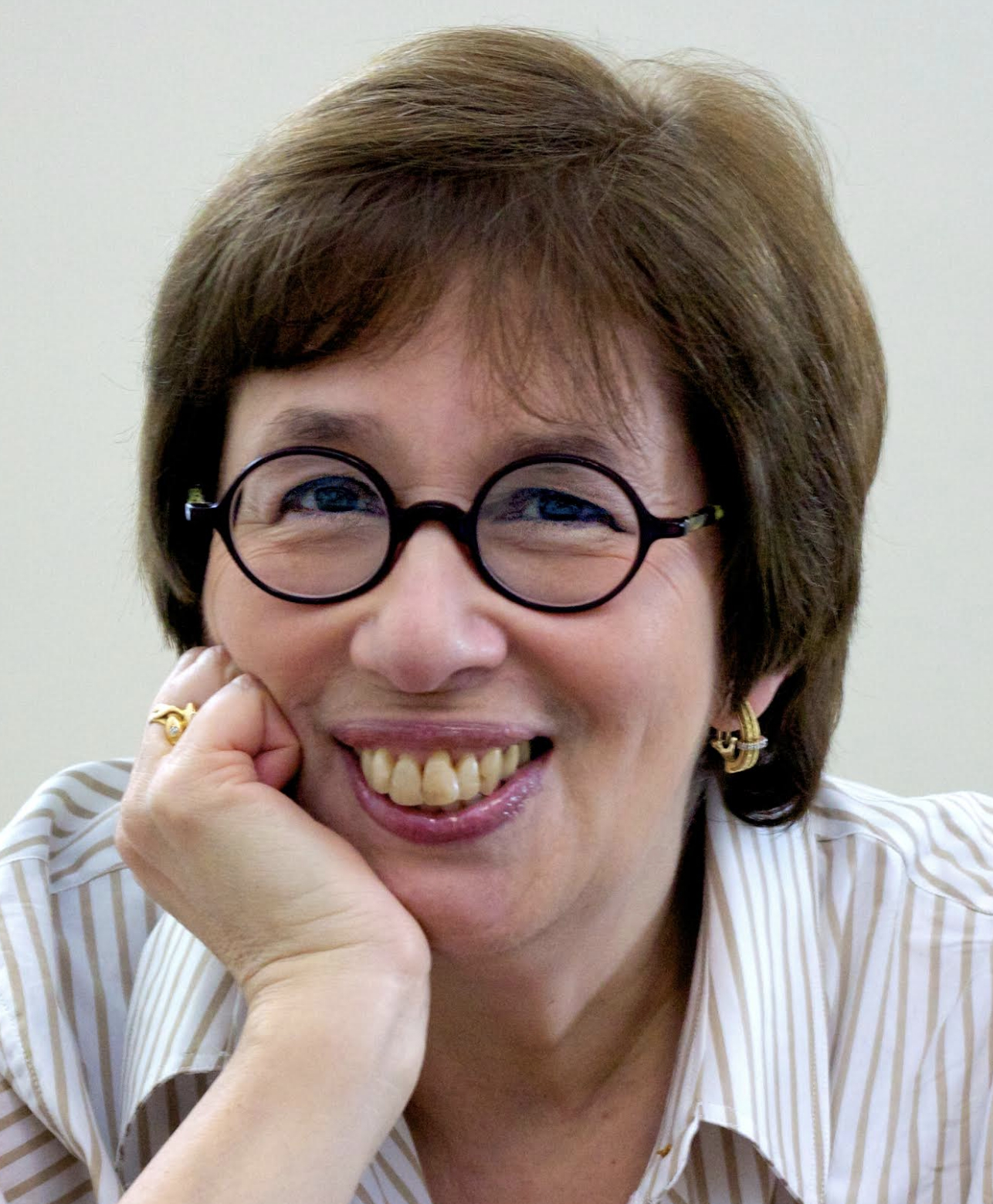
On this date in 1947, Pulitzer Prize-winning journalist Linda Greenhouse, a staunch advocate of state-church separation, was born in New York City to H. Robert Greenhouse, a physician, and Dorothy Greenlick Greenhouse, a 1941 graduate of Hunter College. She grew up in Hamden, Conn., later earning a B.A. in government while graduating magna cum laude in 1968 from Radcliffe College, where she was an editor at the Harvard Crimson, worked as a stringer for the Boston Herald and was elected to Phi Beta Kappa.
She joined The New York Times in 1968 as a news clerk to columnist James Reston, then worked as a reporter and Capitol bureau chief covering the legislature in Albany. After a year at Yale Law School, where she earned a master of studies in law degree in 1978, Greenhouse joined the Times’ Washington staff and started a 30-year career reporting on the U.S. Supreme Court.
She won the Pulitzer Prize for Beat Reporting in 1998, the American Political Science Association’s 2002 Carey McWilliams Award for “a major journalistic contribution to our understanding of politics” and the 2004 Goldsmith Career Award for Excellence in Journalism from Harvard University’s Kennedy School. Accepting a Radcliffe Institute Medalist award in 2006, she decried “the sustained assault on women’s reproductive freedom and the hijacking of public policy by religious fundamentalism.”
She ended her tenure as a reporter at the Times in 2008 while continuing to write a biweekly op-ed column on law as a contributing columnist. As of this writing, Greenhouse is the Joseph Goldstein Lecturer in Law and Knight Distinguished Journalist in Residence at Yale Law School and president of the American Philosophical Society. Her husband, Eugene Fidell, is the Florence Rogatz Lecturer in Law at Yale, and their daughter Hannah is a filmmaker in Los Angeles.
Her books include Becoming Justice Blackmun: Harry Blackmun’s Supreme Court Journey (2005), Before Roe v. Wade: Voices That Shaped the Abortion Debate Before the Supreme Court’s Ruling (with Reva Siegel, 2011), The U.S. Supreme Court: A Very Short Introduction (2012), The Burger Court and the Rise of the Judicial Right (with Michael Graetz, 2016) and Just a Journalist: Reflections on the Press, Life, and the Spaces Between (2017).
Greenhouse, speaking at FFRF’s 33rd national convention in October 2010 in Madison, Wis., said she admires the foundation’s work and always finds briefs filed by its attorneys “refreshing and very enlightening.” Her speech addressed “Monumental questions” before the Supreme Court.
“[I]t’s past time for the rest of us to step back and consider the impact of religion’s current grip on public policy — not only on the right to abortion, but on the availability of insurance coverage for contraception in employer-sponsored health plans and on the right of gay and transgender individuals to obtain medical services without encountering discrimination.”
— Greenhouse, "Let's Not Forget the Establishment Clause," The New York Times (May 23, 2019)
Compiled by Bill Dunn
© Freedom From Religion Foundation. All rights reserved.
Simone de Beauvoir
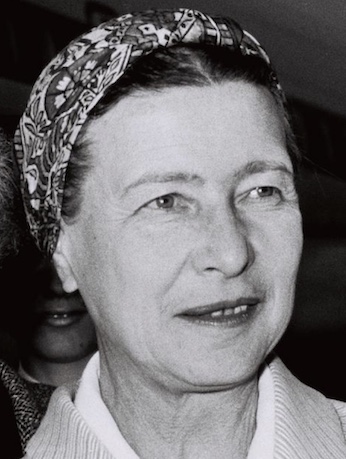
On this date in 1908, French author and atheist Simone de Beauvoir was born in Paris to Georges Bertrand de Beauvoir, a legal secretary, and Françoise de Beauvoir (née Brasseur), a wealthy banker’s daughter and devout Catholic. A deeply religious child, she initially wanted to be a nun but at age 14 had a crisis of faith and concluded there was no God. She instead studied and taught philosophy and wrote prolifically.
Educated at the Sorbonne, de Beauvoir played a major role in the French Existentialist movement, along with close companion and atheist Jean-Paul Sartre. She is best-known for her monumental work The Second Sex (1949), in which she posited that society treats woman as “the other.” She also wrote popular novels and other nonfiction such as A Very Easy Death (1964). De Beauvoir championed freedom as the ultimate good.
She and Sartre were involved romantically from 1929 until his death in 1980. She never married or had children while engaging in a number of open relationships, including with women. Perhaps her most famous lover was American author Nelson Algren, whom she met in Chicago in 1947. She died of pneumonia at age 78 and is buried next to Sartre in Montparnasse Cemetery in Paris. (D. 1986)
PHOTO: Moshe Milner photo, Creative Commons 3.0
“Man enjoys the great advantage of having a God endorse the codes he writes; and since man exercises a sovereign authority over woman, it is especially fortunate that this authority has been vested in him by the Supreme Being. For the Jews, Mohammedans, and the Christians, among others, man is master by divine right; the fear of God, therefore, will repress any impulse toward revolt in the downtrodden female.”
— Simone de Beauvoir, "The Second Sex" (1949, translated and edited by H.M. Parshley, 1953)
Compiled by Annie Laurie Gaylor
© Freedom From Religion Foundation. All rights reserved.
Imelda Staunton
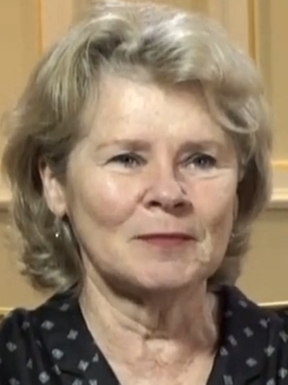
On this date in 1956, actress Imelda Mary Philomena Bernadette Staunton was born in London to working-class Irish immigrants and the only child of Bridie (née McNicholas), a hairdresser, and Joseph Staunton, a construction laborer. Her mother was musically talented and played the fiddle and accordion, all by ear and without being able to read music.
Her parents enrolled her in La Sainte Union Catholic School, founded by an order of nuns for girls aged 11–16, where a teacher inspired Staunton to apply for drama school. From there she worked as a “jobbing actress” for several years in regional repertory that gave her a good theatrical grounding. She met her future husband Jim Carter during a 1982 production of “Guys and Dolls” at the National Theatre. They wed the next year and their only child, Bessie Beatrice Carter, was born in 1993 and became an accomplished actress.
Staunton says she has had “a problem with religion per se” since rejecting Catholicism at about age 14. (The Times of London, June 21, 2008)
Her film debut was in the British historical drama “Comrades” (1986), and she continued to have steady work on stage and television in addition to film roles throughout the next decade and beyond, including “Much Ado About Nothing” (1993), “Sense and Sensibility” (1995) and “Shakespeare in Love” (1998).
Her breakout role was in “Vera Drake” (2004), in which she played Drake, a working-class Brtish woman who performs illegal abortions in the 1950s as acts of charity for no fee. Her performance brought her Best Actress honors at the European Film Awards, the BAFTAs, and the Venice Film Festival and nominations for an Academy Award and Golden Globe Award.
Staunton portrayed Dolores Umbridge in “Harry Potter and the Order of the Phoenix” (2007), for which she received widespread acclaim, and reprised the role in “Harry Potter and the Deathly Hallows – Part 1” in 2010. She appeared with Carter in “Downton Abbey” films in 2019 and 2022.
As of this writing in 2025, the diminutive actress (5 feet tall) has 117 acting credits and 75 award nominations. She portrayed Queen Elizabeth II on all six seasons of the Netflix series “The Crown” and garnered Golden Globe and Prime Time Emmy nominations. She played Dolly Gallagher Levi in a revival of the musical “Hello, Dolly!” In 2024 at the London Palladium.
For her services to drama and charitable endeavors, she has been appointed a Dame Commander of the Order of the British Empire. The Dame honorific for women equates to Sir for men.
PHOTO: Staunton in 2019; Lega Nerd photo under CC 3.0.
“I don’t feel the need for religion. But I went on a yoga retreat last year and I do believe slightly in the karma thing and just being good and true unto yourself. And I slightly believe that you can attract good and bad to you. Chaotic people often have chaotic lives, and I think they create that. But if you try and have an inner peace and a positive attitude, I think you attract that.”
— Interview, The Times of London (June 21, 2008)
Compiled by Bill Dunn
© Freedom From Religion Foundation. All rights reserved.