May 19
Lorraine Hansberry
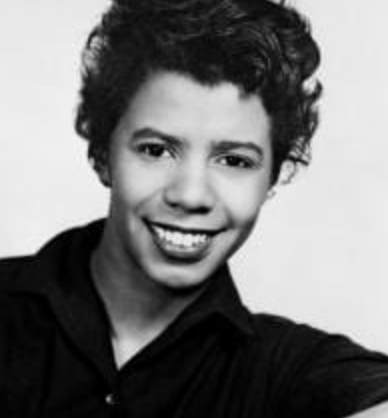
On this date in 1930, Lorraine Hansberry was born in Chicago, the daughter of civil rights activists and intellectuals. Her play, “A Raisin in the Sun” (1959), the first drama by a black woman to be produced on Broadway and winner of the New York Drama Critics’ Circle Award, was loosely based on her own experiences. When she was 8, her parents bought a house in a white neighborhood, where Lorraine witnessed a racist mob and her parents’ resulting civil rights case.
She studied at the University of Wisconsin for two years, then moved to New York to become a writer, working as an associate editor of Paul Robeson‘s “Freedom.” She married Robert Nemiroff in 1953, whom she met on the picket line while protesting discrimination at New York University. Hansberry divorced her husband in 1964.
Hansberry selected the title of her play from a line in a poem by Langston Hughes: “What happens to a dream deferred? Does it dry up like a raisin in the sun, Or does it explode?” Sidney Poitier starred in both the play and film version. The play’s central protagonist is Beneatha, an eager young woman determined to fight social convention and go to medical school. Beneatha is a “self-avowed” atheist (who gets slapped by her mother for admitting it).
Hansberry wrote “The Drinking Gourd,” commissioned by the National Broadcasting Co., in 1959. About the American slave trade, it was considered too hot for television and was never produced. Her play, “The Sign in Sidney Brustein’s Window” (1964), was about a Jewish intellectual. It played on Broadway while Hansberry was being hospitalized for the cancer that cut her life short at age 34. “To Be Young, Gifted, and Black” was posthumously adapted from her writings and was produced off-Broadway in 1969, also appearing in book form in 1970. (D.1965)
“I get tired of God getting credit for all the things the human race achieves.”
— Hansberry, “Raisin in the Sun” (words ascribed to Beneatha)
Annie Laurie Gaylor
© Freedom From Religion Foundation. All rights reserved.
Nora Ephron
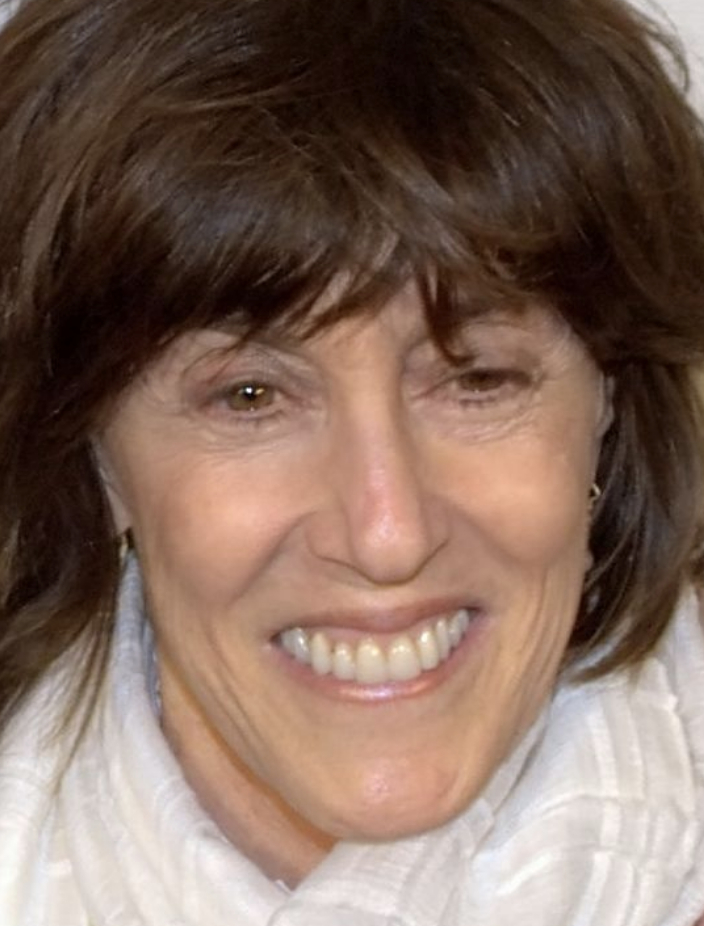
On this date in 1941, Nora Ephron was born in New York City, the eldest of four daughters of Phoebe (Wolkind) and Henry Ephron, Jewish screenwriters. She was named Nora after the protagonist in Henrik Ibsen‘s play “A Doll’s House” and grew up in Beverly Hills, Calif. She attended Wellesley College and graduated in 1962.
Shortly after graduation, she began writing for the New York Post and worked for that publication for five years. She went on to write a column for Esquire on women’s issues. Her first film, “Silkwood” (1983), which she co-wrote, starred Meryl Streep as a labor activist and nuclear whistle blower.
Ephron wrote, produced or directed over 15 movies, including “When Harry Met Sally” (1989), “Sleepless in Seattle” (1993), “You’ve Got Mail” (1998) and “Julie & Julia” (2009). Discussing with interviewer Linda Wertheimer the love of butter that Ephron’s mother and chef Julia Child shared, Ephron said a cook “can never have too much butter. That is my belief. And I stuck it into the movie. If I have a religion, that’s it.” (NPR, Aug. 7, 2009)
Kristin Marguerite Doidge in Nora Ephron: A Biography (2022) quoted longtime friend Dianne Dreyer: “I know she didn’t believe in an afterlife, and I know she wasn’t a religious person, but she certainly believed in magic. She certainly believed that one of the greatest pleasures you can have in life is doing something special for someone else.”
She was particularly adept at writing for the romantic comedy genre, but it was rom-com with a feminist bent. She received numerous awards, including a BAFTA for Best Original Screenplay for “When Harry Met Sally” in 1989 and was nominated for many others, including several Oscars and Golden Globes.
Ephron was also the author of several humorous books, novels and collections of essays, including Heartburn (1996), Wallflower at the Orgy (2007), I Feel Bad About My Neck: And Other Thoughts on Being a Woman (2008), and I Remember Nothing: And Other Reflections (2011). Her plays include “Lucky Guy,” which premiered posthumously on Broadway in March 2013 starring Tom Hanks. Ephron had spent years researching Mike McAlary, the real journalist the play is based on.
Ephron was known for her sense of humor, quick wit and enjoyment of cooking. She was an accomplished chef. She worked closely with her sister, Delia Ephron, on much of her work. Ephron had a famous, short-lived marriage with Watergate reporter Carl Bernstein (inspiring her novel Heartburn). She had two sons, Max and Jacob, with Bernstein. She was married to her third husband Nicholas Pileggi, for over 20 years and was with him until she died at age 71 of acute myeloid leukemia. (D. 2012)
PHOTO: Ephron at the 2010 Tribeca Film Festival; David Shankbone photo.
“My mother was not one to go in for superstition or miracles — godlessness was for her a form of religion, a belief in self-sufficiency above all else.”
— Jacob Bernstein, speaking about his mother the year after her death (New York Times, March 6, 2013)
Compiled by Sarah Eucalano and Bill Dunn
© Freedom From Religion Foundation. All rights reserved.
Kate Cohen
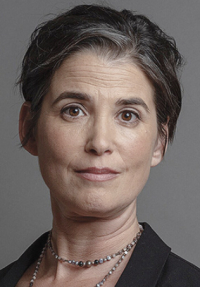
On this date in 1970, columnist and author Kate Cohen was born in Montgomery, Ala., to Judy and Ralph Cohen. Her father taught Shakespeare at James Madison University in Harrisonburg, Va., and then at Mary Baldwin University in Staunton. Her mother was a travel agent and later an administrator at James Madison University. She has an older sister, Amy, a classics professor, and a younger sister, Sady, a video producer.
“I grew up Reform Jewish and bookish. Technically, I guess, the prayers we said in Hebrew to bless the wine on Friday nights were addressed to an actual being. But when we talked about God, we spoke of him as a fascinating literary character rather than as a real force in our lives. So I have no memory of believing in God, even at my bat mitzvah.” (BuzzFeed, June 9, 2015)
“The first time I remember opting out [of religious instruction] was in elementary school in rural Virginia, when my classmates went to learn about Jesus every week in a trailer off school grounds. I got to stay behind in an empty classroom because I was Jewish,” Cohen later wrote. (Washington Post, Feb. 3, 2023)
After earning a degree in comparative literature from Dartmouth College in Hanover, N.H., she freelanced as a writer, copy editor and proofreader for clients large and small.
She had met Adam Greenberg in college and moved with him to his hometown of Albany, N.Y., after she graduated. He was also raised Jewish and like her did not believe in God. They married in 1997, the year she published “The Neppi Modona Diaries: Reading Jewish Survival through My Italian Family.” (University Press of New England)
The Cohen-Greenberg nuptials were Jewish, although “we studiously avoided invoking [God’s] name,” Cohen remembered. Library Journal called her second book, “A Walk Down the Aisle: Notes on a Modern Wedding,” published by Norton in 2001, a “poignant memoir of a modern, educated, cohabitating couple’s decision to marry” after living together for seven years.
She and Greenberg — a hay farmer and town councilman — have three children: Noah (b. 2000), Jesse (b. 2002) and Lena (b. 2005). “We live on a farm, although of course the children are gradually leaving. We try to keep them lured in with good food and plenty of room for their friends to stay,” Cohen said.
In 2020, after she published a succession of freelance opinion pieces in the Washington Post, the paper hired her to “provide commentary on the intersection of faith, family, politics and culture.” Her Post bio says her essays “seek to distill observations of family, politics, and culture into moments of clarity and insight.”
One insight: “[I]t wasn’t until I had children that I realized I had to spell it out: “God was a compelling fiction created in response to human need.” Once, when her daughter was 9 and doing her math homework, she asked, “How do we know there’s no God?” Lena needed more than her brothers did to overcome her doubt, Cohen realized. “It was my solemn responsibility as a parent to give her the information she asked for, to help her understand the world.”
Her book “We of Little Faith: Why I Stopped Pretending to Believe (And Maybe Why You Should Too)” was published by Godine in 2023. Cohen had started thinking long ago that “a lot of people were pretending to believe, as I had done, and denying themselves the pleasures of authentic thought about big questions. But also it seemed to me that if more of us said, ‘You know what? Nah,’ we could break the stranglehold that religious belief has on public life in America. And that was 10 years ago or more, before Dobbs, before this anti-trans panic, before the Supreme Court started to decide that religious freedom meant the freedom to discriminate etc., etc. Now the situation is even more urgent.” (Email correspondence, June 28, 2023)
She was the 2023 recipient of FFRF’s Freethought Heroine Award, bestowed to recognize the special contributions of women to freethought and to the battle to keep state and church separate. Her appearance on FFRF’s talk show “Freethought Matters” is here.
“If parents want to erase the line between religious doctrine and verifiable fact, no U.S. government, state or federal, has the right to stop them. But no government concerned with educating children should be paying for the eraser.”
— Cohen, commenting on Oklahoma's decision to let a Catholic archdiocese operate a public school funded by taxpayers. (Washington Post, June 27, 2023)
Compiled by Bill Dunn; photo by Elisabeth Smolarz
© Freedom From Religion Foundation. All rights reserved.
Mustafa Kemal Atatürk
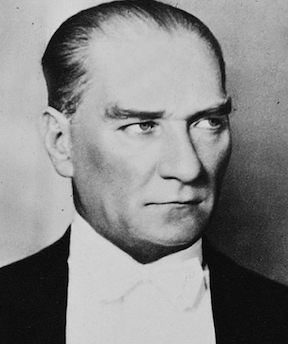
This date in 1881 is observed as the birthdate of Turkish statesman Mustafa Kemal Atatürk. (The exact day is unknown due to unclear records and the use of different calendars.) The founder of modern Turkey (officially the Republic of Türkiye), he reshaped his country as a secular nation after the fall of the Ottoman Empire.
He was born in the city of Salonica, now known as Thessaloniki and currently in Greece, to an army officer father and a mother from a farming family. He opted for a military education in high school against his mother’s wishes and graduated from the Ottoman Military College in Istanbul. Soon after, he fought in a series of conflicts such as the Italo-Turkish War and the Balkan Wars.
He was given prominent World War I army commands and was said to have been the only Turkish general to emerge undefeated among the Central Powers that included Germany, Austria-Hungary and Bulgaria. He successfully marshaled the military of the vanquished Ottoman Empire to safeguard the core of the Turkish homeland — and the current republic was proclaimed on Oct. 29, 1923, with Atatürk as president.
Atatürk introduced wholesale reforms so associated with him that the underlying ideology is referred to as Kemalism. A key part of this is a secular outlook. Kemalist secularism took the religion-suffused Ottoman Empire and radically transformed it for the new republic. As of this writing in 2025, Turkey is home to over 85 million people. Most are ethnic Turks and Kurds are the largest ethnic minority. While officially secular, it has a Muslim-majority population.
Not only was the state separated from religion, but Atatürk also undertook cutting-edge social change across education, women’s rights, the legal system, dress and language. Through such measures, he initiated a metamorphosis of Turkish society.
“Atatürk’s ‘revolutions,’ as they are still praised in Turkish textbooks, were sweeping,” explains Turkish scholar Mustafa Akyol in an article for The Century Foundation. “The ‘Ministry of Sharia’ was disbanded, and Sufi orders and traditional madrasas (Islamic schools) were banned, leaving behind little trace of organized religion, while mosques were placed under government control. The Ottoman fez was banned and the European-style brimmed hat was imposed by law for government officials. The Islamic calendar was replaced with the Gregorian one, and the Arabic alphabet with the Latin.”
The strong-handed ways in which he pushed through his agenda complicate any complete assessment, but there is no denying that this was among the most rapid transformations in the history of any society. Even with an Islamist party in charge of the country for the past many years now, Turkey is still officially secular, with the constitutional structure being chipped away at rather than being demolished.
Atatürk’s own perspective on religion has been a matter of intense debate. Some scholars assert that he was not religious; others argue he embraced certain aspects of Islam. What is undeniable is that he wanted religion separated from the public sphere — contrary to past practices in his country and the prevalent norms in the region.
In a 1928 book by Grace Ellison titled “Turkey Today,” he is quoted as saying “I have no religion, and at times I wish all religions at the bottom of the sea.” He later denied saying this, whether because he didn’t say it or because he was making a political calculation.
Atatürk’s efforts earned him many admirers worldwide. Presidents Franklin Roosevelt and John F. Kennedy spoke highly of him, as did Charles de Gaulle and other Western figures. Modernizers in the Middle East and North Africa, such as Reza Shah in Iran and Habib Bourguiba in Tunisia, drew inspiration from his secularism.
Atatürk died at age 57 in Istanbul, his life cut short due to overwork, smoking and alcohol consumption. His legacy lives on, not only in Turkey but far beyond. (D. 1938)
PHOTO: Atatürk in 1932.
“We derive our inspiration, not from heaven, or from an unseen world, but directly from life. Our path is guided by the homeland we live in, the Turkish nation of which we are members, and the conclusions we have drawn from the history of nations.”
— Speech to the Turkish Grand National Assembly (Nov. 1, 1937)
Compiled by Amitabh Pal
© Freedom From Religion Foundation. All rights reserved.