The winners of the 2025 Student Essay Competitions are listed below.
The Freedom From Religion Foundation has announced its 2025 essay competitions for freethinking students, offering more than $70,000 in scholarships.
Each of these four contests has 10 top prizes: First place $3,500; second place $3,000; third place $2,500; fourth place $2,000; fifth place $1,500; sixth place $1,000; seventh place $750; eighth place $500; ninth place $400; and 10th place $300. FFRF also offers optional honorable mentions of $200.
The contests cater to students in various age and class ranges.
Students may only enter one FFRF contest annually and may not enter a contest if they have previously won an award in that particular contest.
Requirements: Winners may be asked to send verification of student enrollment. Students will be disqualified if they do not follow instructions, including the word limit and the deadline. Students must submit their essays via the online application and carefully review all contest rules. FFRF monitors for plagiarism. Include links or footnotes for quotes, studies cited, or significant facts relied upon. Entrants must verify that the essay is their original work and that AI was not used in the writing of the text (beyond grammar and spellcheck).
-
- David Hudak Memorial black, indigenous and persons of color student essay competition winners
- William Schulz high school essay contest winners
- Kenneth L. Proulx Memorial essay contest for ongoing college students winners
- Cornelius Vander Broek graduate/older student essay competition winners
- Diane and Stephen Uhl Memorial essay competition for law students winners
William J. Schulz Memorial Essay Contest for College-Bound High School Seniors
The Freedom From Religion Foundation is proud to announce the winners of the 2025 William Schulz High School Essay Contest. FFRF has awarded $17,950 in scholarship money for this year’s contest!
College-bound high school seniors were asked to write a personal persuasive essay based on this prompt: “To do good is my religion. Write a first-person essay that asserts why ‘doing good’ is not dependent on religious belief.”
FFRF awarded 11 top prizes and 10 honorable mentions. (FFRF seeks to distribute essay scholarship monies to a higher number of students, so ties — such as eighth place in this contest — are not regarded in the typical tie fashion, where, in this instance, ninth place would be skipped.)
Winners are listed below and include the college or university they are now attending and the award amount.
FIRST PLACE
Shaurya Bhartia, UC-Berkeley, $3,500.
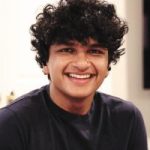 When my father’s monitor chirped its antiseptic lullaby, I folded my hands by his bed and whispered T. S. Eliot’s final benediction — “Shantih, shantih, shantih.” Peace, however, arrived not from heaven, but from Earth: My mother translating medical jargon into treatment plans, nurses rehearsing compassion in midnight shifts, a technician tightening the IV line with the tenderness of a friend. That ward became the first classroom in which I learned that goodness is a verb, not a theology.
Marcus Aurelius crystallized what the ward had taught me: We govern only our choices and the help we extend. Virtue, he wrote, is “what you do when nothing compels you but conscience.” In practice, secular conscience is potent. Developmental psychologist Paul Bloom shows that infants display empathy before they can pronounce a single prayer; compassion is older than creed. When critics claim morality collapses without scripture, I recall the cardiology resident who stayed past her shift so my father would not wake up alone. Her kindness did not depend on a promised heaven.
Read more of Shaurya’s essay in Freethought Today
SECOND PLACE
Benjamin Meerson, UC-Berkeley, $3,000.
 On Feb. 17, 1600, a Dominican friar, after seven years of imprisonment and torture, was escorted to his execution at Campo de’ Fiori. His tongue was secured with a metal clamp in fear that he might address the crowd with his “wicked words.” The friar was then stripped naked, hanged upside down, removed from the gallows while still alive and, finally, burned at the stake. His name was Giordano Bruno.
It is a well-known story, as are those of others who came before and after. Some, like Copernicus and Galileo, were spared, at the cost of renouncing their ideas. Others, like the Alexandrian Hypatia, were lynched by religious fanatics 1,200 years before Bruno, yet for the same crime — teaching the heliocentric model.
Read more of Benjamin’s essay in Freethought Today
THIRD PLACE
Ian Klimov, Yale, $2,500
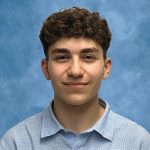 The running joke is: “two Jews, three opinions.” Add me in, and you get four — and not one of them includes God.
I was raised Jewish, the kind of Jewish that meant Shabbat candles sat next to Darwin’s “Origin of Species” on the bookshelf. We kept Passover but also kept Richard Dawkins in print. And still, my Bar Mitzvah was earnest: Hebrew school, Torah portion, suit and tie. The speeches were heartfelt and the bagels plentiful. But somewhere between the gefilte fish and the Haftarah, I realized: I don’t believe any of this; the parting of the sea or the talking bush, divine plan, the man in the sky, the afterlife with unlimited lox — none of it.
Read more of Ian’s essay in Freethought Today
FOURTH PLACE
Patrick Le Febvre, University of Connecticut, $2,000.
 If morality is dictated by divine command, does good cease to be good without God? While one’s perspective of morality is subjective, what is good is good, and does not require justification in the name of the Lord. Rather, I contend that morality is rooted in empathy and compassion. It does not require religious backing, and ethical systems can exist robustly without reference to the divine.
Religion has not been incorporated into my upbringing, as I have only ever been inside churches as a gigging musician. While I was not raised in a religious setting, my lack of spirituality is derived from much more than a lack of exposure. I don’t see the value in spending one’s life appealing to an unproven higher power when this one life is all that we are promised. So, I strive to maximize my time and make the one world we are sure of a better place. Life is too short to concern oneself with what lies beyond. I would much rather focus on improving what we do have, ensuring a better world for humanity’s future generations.
Read more of Patrick’s essay in Freethought Today
FIFTH PLACE
Alice Giambalvo, Texas A&M, $1,500.
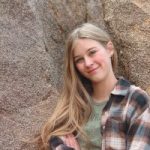 Throughout my life I was told, with steely eyes and sure-fire voices, that the church is good. From cardboard signs held on the side of the highway to chants that echoed off the curves of the land, God was good, Christians are good. I was 8 years old when one of those good Christians told me to go to hell. I was so excited to learn and share the fact that we are made up of the same stuff as stars, and apparently that landed me a spot in hell. I was only 8 and she was only 8 — just children reflecting the hatred of the world.
As I got older, I began to notice that those cardboard signs held hateful words. “Honk if you hate the gays,” one of them read. The public library was the next target, as people following the all-loving God banned book after book. You have to protect the children, you know. God forbid I read of love without boundaries. God forbid there was more than one god.
Read more of Alice’s essay in Freethought Today
SIXTH PLACE
Noelle Kim, California Institute of Technology, $1,000.
 In the Western world, people have long equated religion with morality. Growing up Catholic, I once subscribed to this exact viewpoint, grounding the entirety of my moral compass in sacred scriptures. However, as I grew older and began to critically examine my beliefs, I realized that morality doesn’t actually require faith in a god or adherence to arbitrary religious dogma. Instead, it can — and should — be based on reason, compassion and the desire to do good for others.
Contrary to common belief, I find it dangerous to tether one’s morality entirely to religious dogma. Religion creates a structure of “absolute truths” — a hierarchy of rules and values that cannot be questioned or disputed. In fact, under Catholicism, disagreeing with or speaking out against dogma is actively considered a sin, no matter your reasoning. Under this framework, religion can actively encourage people to act in harmful and cruel ways — even when certain rules contradict one’s conscience or others’ rights. This is why historically, and even currently, biblical passages like Exodus, Leviticus and Corinthians have been used to justify and support slavery, homophobia and patriarchal gender norms. Although these systemic evils clearly perpetuate injustice and violence — contradicting more fundamental values like “Love thy neighbor as thyself” — religious dogma leaves no room for people to question these contradictions. Instead, it stifles our morality.
Read more of Noelle’s essay in Freethought Today
SEVENTH PLACE
Dong En Wu, Marquette University, $750.
 Having grown up in the youth program of Christ’s Commission Fellowship (CCF), I always lay awake at night with questions that would not go away. Everybody else around me was so sure where morality came from, but I just could not connect with their answer. They always said morality came from God, from faith in the Holy Spirit. It left me feeling like a stranger, like there was something amiss with me for questioning. Why did goodness have to be about things that I myself could not accept?
It hurts when people assume you can’t be moral without religion. The accusation stings: “Without God, what’s stopping you from doing whatever you want?” Like the only thing restraining everyone from chaos is fear of punishment by a deity. But, in all sincerity, doesn’t that presumption say more about them than it does about me? I do think there is goodness because I’ve seen the unadulterated pain of watching people suffer and the raw joy of helping to ease some of that suffering — not because I’m afraid of some cosmic scoreboard.
Read more of Dong’s essay in Freethought Today
EIGHTH PLACE (tie)
Kiera Robinson, Nova Southeastern University, $500.
 There was a time when humans foraged plants, hunted animals and survived not through divine guidance, but through cooperation and pure instinct. We did not rely on gods to tell us how to share food or protect one another. We just did it. We did it because it made sense for our survival. As society evolved, so did our desire for meaning and structure.
Religion offered comfort and community, but it also became a tool for division. It alienated those who did not conform, creating barriers and creating an “us” and “them.” Many attribute their good deeds to God, claiming it guides their sense of right and wrong. As an atheist, I see things differently because I do not perform good deeds to win divine favor. I do good because it feels right. In some ways, I believe this makes my actions more genuine as they are rooted in empathy, not obligation.
Read more of Kiera’s essay in Freethought Today
Kennedy Cordle, North Carolina A&T State University, $500.
 The “pro-life” stance in America unmasks the conflict that exists between morality and religion in defining good. I believe “doing good,” as referenced in biblical principles, is the highest form of morality; showing love, offering empathy and uplifting others. However, if we, as a country, are to truly call ourselves pro-life, our actions must reflect a commitment to life beyond the womb.
Faith-based communities define pro-life solely as anti-abortion, ignoring the complexities of real life. What about the mother who must undergo a life-saving abortion? Or the teenager forced to carry a pregnancy as a result of sexual violence? These women are often condemned and judged by the same people who claim to stand for life.
Read more of Kennedy’s essay in Freethought Today
NINTH PLACE
Callum Wilford, University of Florida, $400.
 What should you eat for breakfast? Which route should you take to work? Do you simply nod to that friend when you pass in the hallway, or do you stop and spark a conversation?
Every day, our brains process countless choices, evaluating the potential consequences of our actions. Naturally, most people answer the majority of these questions without even considering them, guided by their internal desires and goals. For more complex ethical concerns, many people rely on a more rigid set of moral guidelines: religion.
Read more of Callum’s essay in Freethought Today
TENTH PLACE
Chauntel Berry, Rochester Institute of Technology, $300.
 As Thomas Paine once famously declared, “to do good is my religion” is a sentiment I highly agree with. As someone who identifies as agnostic, bordering on atheist, I believe that doing good, a long-term human imperative, is not based on religious belief at all, and that having a good moral compass does not rely on worshiping a god, holy bibles or rigid dogma.
My identity of being agnostic stems from my deep respect for evidence and scientific research. To me, a claim as large as the existence of a supreme being requires extraordinary evidence, and overall, nobody has proven such a thing. Furthermore, it is due to the scientific lens I see through, which revolves around critical thinking and a reliance on observable phenomena, that I cannot simply believe. Faith, while a powerful force for many, often requires a suspension of disbelief that I find difficult to follow due to my understanding of the universe and the science that follows suit.
Read more of Chauntel’s essay in Freethought Today
HONORABLE MENTIONS ($200 each)
Isabella Cassells, Coastal Carolina University.
I volunteer at Feed My Starving Children, a nonprofit that packages nutritious meals for malnourished kids around the world. I’ve spent hours scooping rice, sealing packets and boxing meals alongside people from all backgrounds — religious, spiritual and secular like me. No one asks about your religion at the door. What matters is your willingness to show up and care.
My motivation doesn’t come from a promise of heaven or fear of punishment. It comes from imagining what it would feel like to be a child going to bed hungry and knowing I have the power to help. I don’t need scripture to tell me that letting someone starve is wrong.
Isabella, 18, is from Hastings, Minn., and attends Coastal Carolina University with plans to major in molecular and cellular biology and minor in genetics.
Ariana Delgado, University of Texas- El Paso.
 Sin is a weaponized concept used to uphold oppressive power structures. Morality should be based on understanding people, an understanding of reality. Understanding history makes it impossible for me to see religion as a universal good.
I volunteer at a local queer organization, setting up events to spread joy. I donate blood because the prick of a needle is nothing compared to the suffering of those who need it. Doing good isn’t about what God you worship. It’s about taking action against injustice, understanding your situation with oppression, and dismantling it. My lack of religion is not a lack of morals, it is refusing to blindly obey at the cost of others.
Ariana, 18, is from El Paso, Texas, and attends the University of Texas-El Paso, with plans to major in media production.
Jayden Fernandez-Morales, University of California-Riverside.
 The idea that atheists are inherently immoral due to a lack of belief or denial of faith comes from a true misunderstanding of the true meaning of morality. It isn’t about following a set of objective instructions, it’s about how we treat others and how our actions affect the world around us.
The idea that it falls solely from God and his holy books is limited and fails to consider the complexities of human nature. We can be good people and have positive actions with a clear understanding of the needs of others. We don’t need religion to be moral; we need to care for the world around us.
Jayden, 18, is from Rio Linda, Calif., and attends the University of California Riverside, with plans to major biology.
Caleb Forehand, East Carolina University.
 In those cramped backrooms of a tiny church, in a tiny county, is where I completely lost my faith. In my last few moments of innocence, I stood to ask a question. “What would happen if I did bad things?”
“Well, you’d go to Hell.” The words slipped out of the teacher’s lips, cool and terse; utterly indifferent. It was like she was reciting a fact out of a textbook, not condemning a child. I felt no love in those words. I started to panic. My mom’s done bad things, right? My dad? I couldn’t stay in that room anymore. I excused myself to the bathroom and waited, with tears dripping, until the session was over.
As I look around today, still I see far more love and acceptance pour out from the scientific community than from the churches. Accepting people as they are and as they would like to be, not shunning those for their sexual orientation or belief system. Standing together as one body and proclaiming that we are here, pushing out against the void. We are here, and we love because we want to, not because we were told.
Caleb, 17, is from Camden, N.C., and attends East Carolina University, with plans to major in physics.
Anna Izquierdo, Colby College.
 Religion always particularly fascinated me. I checked out book after book about a wide variety of religions from my local public library, including a children’s edition of the bible. However, no matter how many books I read, I never understood how people could let these stories dictate their lives. The more I learned about religion, the more I felt that no one religion was more valid than the others. The more I learned about natural sciences and human history, the more skeptical I became about religion in general. Slowly, my skepticism developed into atheism.
I do good because I care, and caring is something every person can do, whether they hold sacred the bible or “On the Origin of Species.” Goodness does not belong to religion. Goodness belongs to humanity.
Anna, 19, is from Massapequa Park, N.Y., and attends Colby College, with plans to major in environmental science.
Jocelynn Malone, Heidelberg University (Ohio).
 My atheism follows from a simple question: If there is an omnipotent, good God, then why is there so much injustice and suffering in the universe? Natural catastrophes, poverty, and brutality afflict innocent individuals disproportionately — facts not consistent with the conception of an all-powerful, benevolent deity. While some may see these difficulties as “tests of faith” or “God’s will,” I see them as evidence of a world that operates independently of divine control. This has not led me to nihilism or indifference but has strengthened my resolve to be an instrument of compassion in an indifferent world.
I believe that ethics should be based on empathy, critical thinking, and a sense of common good. Empathy allows us to connect with people’s experiences despite not having them ourselves. Critical thinking allows us to evaluate the impact of what we do aside from the temporary gratification or self-interest.
Jocelynn, 18, is from Albany, Ohio, and attends Heidelberg University, with plans to major in veterinary medicine.
Eden Sterk, University of Florida.
 I’ve seen the effects of how seemingly altruistic religious people can promote problematic ideas and effects in vulnerable communities. To me, part of being an atheist is the importance of free will. If someone does good deeds simply to get into heaven, is helping people their true intention?. I would argue doing service without the ulterior motive of accruing “points” to secure your own afterlife is perhaps more valuable—there are no contingencies to the people you will help if you are not worried about needing to convert them.
As an atheist, I know there is nobody to save us but ourselves. To believers this can seem like an inherently negative thing; however, I disagree. It means that every child in cancer remission has science and not a miracle to thank. It means that when rescuing people after natural disasters, it was because of our search and rescue and first responder teams, not an entity from the sky. It means that we are capable of great things on our own.
Eden, 18, is from Cape Coral, Fla., and attends the University of Florida, with plans to major in microbiology.
Alani Timmons, Carnegie Mellon University.
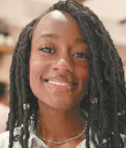 I’m not religious anymore. I don’t believe in God. But I do believe in doing what’s right even when it’s hard. Those beliefs weren’t handed down from scripture. They came from simply living and breathing. From my own experiences. From helping someone and feeling the genuine reward of their relief, not a promise of heaven I was constantly told.
I’ve helped strangers who were lost and stranded in the rain. I’ve sat and listened to my friends when they felt alone. I’ve stood up for classmates when it wasn’t popular. Not because I thought someone was watching over me, keeping score, but because I knew it mattered, and that it would help someone.
Doing good isn’t exclusive to the religious or devout. It’s something anyone can choose. It’s the only thing I need.
Alani, 17, is from St. Albans, N.Y., and is attending Carnegie Mellon University, with plans to major in business.
Sophia Wang, University of Florida.
 Working at my parents’ restaurant became a learning center for me. I witnessed and experienced countless customers, ironically wearing a cross around their necks or wearing a T-shirt from a community church, cursing at my parents and me. It was jarring. These people who claimed a life free of “sin” and the grace of God were treating people with cruelty and entitlement. What gave them the right to speak with so much hostility while supposedly standing for compassion and kindness?
How could a belief system that was supposed to promote love and understanding allow for such a cruel and dismissive mindset? Where was the golden rule of treating others the way you want to be treated?
Sophia, 18, is from Oviedo, Fla., and attends the University of Florida, with plans to major in biology.
Josiah Wiegrefe, Minnesota State University-Moorhead.
 When I was 13, I started questioning my beliefs and began to realize how little it all made sense. It’s not hard to poke holes in Christian teachings, but the thought of all I knew being wrong terrified me. In an attempt to regain my faith, I spent a year and a half, on and off, researching. The more I looked, the less it made sense.
I would say my morals have become more fleshed out since I stopped being Christian, as I have actual reasons for thinking the things I do rather than letting some third-party entity determine what I think.
The capacity for empathy in humans is one of our most beautiful traits; it’s ridiculous to say we need the fear of eternal suffering and damnation to be kind to one another.
Josiah, 19, is from Fargo, N.D., and attends Minnesota State University-Moorhead, with plans to major in film production.
The high school contest is named for the late William J. Schulz, a Wisconsin member and lifelong learner who died at 57 and left a generous bequest to FFRF.
FFRF warmly thanks FFRF’s Lisa Treu for managing the minute details of this and FFRF’s other annual student competitions. And we couldn’t judge these contests without our volunteer and staff readers and judges, including: Don Ardell, Dan Barker, Wrenna Fine, Jon Galehouse, Annie Luarie Gaylor, Brian Gillaspie, Susan Gould, Richard Grimes, Ricki Grunberg, Linda Josheff, Sammi Lawrence, Tori Mizerak, Henry Mongrain, Jason Mosebach, Joanna Papich, Gene Perry, Rose Mary Sheldon and PJ Slinger.
Kenneth L. Proulx Memorial Essay Contest for Ongoing College Students
The Freedom From Religion Foundation is proud to announce the 10 winners and 11 honorable mentions of the 2025 Kenneth L. Proulx Memorial Essay Contest for Ongoing College Students.
FFRF has paid out a total of $19,650 in award money for the contest. Students were asked to write on the topic of “Why the only afterlife that should concern us is leaving our descendants and planet a secure and pleasant future.” Actor and FFRF Lifetime Member Mr. Madison Arnold has generously endowed the $1,000 sixth-place prize. Madison has given a $30,000 endowment as a living bequest, which he calls a “pre-quest.”
The winners, their ages, the colleges or universities they attend, and the award amounts are listed below.
FIRST PLACE

Vera Ngene, 23, Wake Technical Community College, $3,500.
By Vera Ngene
The pipe burst while we slept. We woke to the cold shock of sloshy carpets, the water already rising in brown pools around our beds. For weeks afterward, deafening, whistle-shaped industrial fans battered our eardrums day and night, their shrill whine echoing through the bare bones of our home as workers tore out the ruined floors.
My mother’s only response was to gather us for prayer each night, her threadbare robe pooling around her on the damp subfloor. “God won’t give us more than we can handle,” she insisted, while I watched our landlord ignore our calls and the mold spread like a warning. No amount of praying fixed the leak — but after weeks of my mom’s threats, the landlord caved. They moved us to another unit and tacked on another $200 to the rent — because when has a landlord ever missed a chance to cash in? Those nights of kneeling on concrete, with the fans’ relentless howl drowning out our voices, taught me this: Faith didn’t move the landlord — my mother’s rage did. Prayer didn’t dry our floors, but her willingness to fight forced a solution. In the end, the only divine intervention was my mom’s fury — and even that came with a late fee.
Read more of Vera’s speech in Freethought Today
SECOND PLACE

Corryn Guarino, 19, University of South Florida, $3,000.
By Corryn Guarino
I wondered how so many people could walk past someone curled up on a sidewalk and feel nothing. I wondered why churches, some of the wealthiest institutions in the world, sit locked and empty at night while people sleep just outside their doors? How do you look into the eyes of a starving child, a homeless mother, a city filled with tents, and still whisper, “This is all part of the plan”? You don’t. You look away.
When people say, “God has a plan,” they often mean, “This isn’t my problem to solve.” They create comforting lies to explain the chaos because the truth is too hard to face: There is no plan. There is no reason. There is only us. And the hard truth is, we created this mess. Not some god, not some higher purpose, just people driven by power, greed and the desperate need for control.
THIRD PLACE
Bryce Springfield, 23, University of Massachusetts Amherst, $2,500.
By Bryce Springfield
In our time of need, the homeless shelter gave us a blanket and a bible. As the volunteers murmured, “God has a plan; your reward will come in heaven,” I thanked them. But I knew an afterlife promise wasn’t going to keep my family warm. Certainly, it would not overturn the deeper systemic oppressions plaguing today’s societies.
I grew up low-income and perennially homeless; no prayer ever paid the rent. Disabled and battling mental illness, I still fought to become the first in my family to attend Princeton. But, it was the hardship that taught me deeper wisdom than the university alone: We must help each other here and now instead of waiting for paradise to come to us. Now, I channel that philosophy into labor organizing and democratic economic models — because, if we want a better world, we have to create it.
FOURTH PLACE

Elliot Graham, 21, California Polytechnic State University, $2,000.
By Elliot Graham
From a young age, I was taught that this world was just a temporary test, and that the real reward (or punishment) awaited us after death. Heaven was the ultimate goal. Earth was the waiting room. Something about this outlook never felt right, and, as I grew up, it became increasingly apparent that this worldview had devastating implications.
When we frame our lives around the belief that our time here is merely a test, a stop on the way to something better, then what reason do we have to invest in a planet we’re told doesn’t really matter? Why fight injustice here if perfect, divine justice awaits elsewhere? Belief in an afterlife, while comforting to some, becomes an excuse to dodge responsibility for the issues we face here and now. It allows us to look away, to disengage, to delay meaningful action in favor of passive hope. But this is the only world — the only life — that we are certain of, and no one is coming to save us. If we don’t act, no one will. And the consequences will be ours to live with.
FIFTH PLACE

Samantha Lopez, 19, Oregon Institute of Technology, $1,500.
By Samantha Lopez
You’ll never know when it happens. One moment, you’re here breathing, thinking, being, and the next, nothing. There’s no encore. No curtain call. Just the end. I don’t believe in heaven or hell, reincarnation or karma. There’s no higher power or eternal justice. Once you’re gone, that’s it. There’s no going back to fix what you regret. No watching over the world from above. Just . . . nothing.
Growing up, I was surrounded by two kinds of people. Those who genuinely tried to live “good” and “moral” lives because of their belief in the “afterlife,” and those who used the “afterlife” as a crutch and excuse for their actions. And that belief, no matter how it manifests, comes with consequences.
SIXTH PLACE

(MR. MADISON ARNOLD AWARD)
Dipshika Rai, 19, Northern Kentucky University, $1,000.
By Dipshika Rai
Initially, I regarded religion as generally harmless — providing solace to some, rejected as irrelevant by others and occasionally beautiful in ritual ceremonies and artifacts. As time has gone on, however, I’ve grown to see one of its fundamental concepts — the belief in an afterlife — not as harmless, but rather as a significant obstacle to human advancement, particularly in our need to respond to climate change.
The idea of eternal living after death is alluring and dangerous. Seductive, in that it provides solace in the confrontation with the inevitability of death. Perilous, in that it occasions a frame of mind that departs from the tangible, limited world we experience. I no longer believe in an afterlife, and I have come to regard it as a problem that transcends personal belief. It has grave moral and political implications. The world is in serious danger, and one of the reasons for our inadequate response is the ongoing perception among large numbers of persons that this world is not the ultimate reality.
SEVENTH PLACE
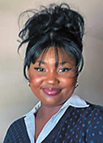
Naila Buckner, 23, Columbia College Chicago, $750.
By Naila Buckner
One of my favorite musical artists, Nina Simone, grew up in a pre-civil rights America. Though she was more fortunate than many at the time, she was thoroughly aware of the destruction of her community. Disturbed by the role religion played in the subjugation of her people, she stated, “The people that built their heaven on your land are telling you yours is in the sky.”
I was born to two young, Christian, Black parents. They paid their tithes faithfully, even when they couldn’t afford bills or groceries. At one point, they were so embedded in their faith that they told me slavery occurred in order to bring Africans to Christ. For years, I have been deconstructing those ideas and thinking about Simone’s words.
EIGHTH PLACE

Lucas Papp, 19, University of Georgia, $500.
By Lucas Papp
Growing up in a Catholic family, I often heard that life on Earth is like a brief trial run before eternity in heaven. This perspective that “what happens while we are here doesn’t matter very much” was meant to be a comforting idea, but always rubbed me the wrong way, especially as I started to turn away from religion and believe that we only have one chance at life.
To me, this indifference, which is very common in people I’ve met who believe in an afterlife, feels like a waste of the precious little time we have on Earth when we could all be making a difference for ourselves and the people who come after us. If this is just a short stop on the way to eternity, what motivation do we have to better the world we live in?
NINTH PLACE

Renata Hubbs, 18, University of Georgia, $400.
By Renata Hubbs
Every summer, my Instagram feed is flooded with post after post of smiling teens in “Jesus loves you” shirts giving out bible verses to poor African children. It’s a familiar scene from Christian mission trips: Privileged teenagers flying out to impoverished areas, posing for a few pictures, and calling it “service.” These teens come back from their missions a little more tan and a little more religious while the communities they visited remain in the same cycle of poverty with a handful of new bibles. The truth is, short-term mission trips are not designed to serve the communities they claim to help. They are made solely as an invite to the heavenly afterlife.
Humanity has held on to religion since the Stone Age because it promises a reward for the sufferings of life. Each religion has its own specific requirements to claim the reward. Hindus believe one must rid oneself of bad karma, Buddhists believe one must follow the Eightfold Path and Muslims hope that obeying Allah will get them salvation.
TENTH PLACE

Kevin Garcia, 21, Texas State University, $300.
By Kevin Garcia
If I were still Christian, I would believe I was going to hell. In kindergarten, my teacher sat us down during Christmas to talk about the birth of Jesus, and how important it was to be good. She said if you were naughty in life, you would go to hell, and if you were nice, you’d go to heaven.
When I went home, I asked my mom if gay people go to hell, because I was worried I might’ve been gay. She said yes, gay people do go to hell. Hell loomed over me like a dark cloud, and that fear stuck with me.
HONORABLE MENTIONS ($200 each)
Jailyn Agard
As humans continue to drill for oil, pollute the air with unseen gases, and poison the oceans with garbage, Christianity blames it on the end times, once again denying human responsibility for the environmental changes we have witnessed in years past.
Jailyn, 19, attends Ramapo College of New Jersey, with plans to major in neuroscience.
Gabriella Badami
The idea that God, or any other higher power one believes in, will ultimately care for the world after we are gone is, at best, overly optimistic. In reality, humanity is the sole force capable of improving our planet and society.
Gabriella, 20, attends Savannah College of Art & Design, with plans to major in jewelry and minor in eyewear design.
Abigail Baltz
Rather than fixating on the question of the afterlife, we must turn our attention to the one certainty we share — our Earth — because its survival is not a matter of belief, but of action.
Abigail, 20, attends Belmont University, with plans to major in psychology.
Bianca Brown
It’s shocking to see how people can describe their “heaven” or afterlife as a classless, moneyless, raceless place and then be against the idea of those concepts being here on Earth.
Bianca, 19, attends Florida Agricultural & Mechanical University, with plans to major in chemical engineering.
Sabrina Canales
The concepts of heaven and hell have long seemed like the threats of consequence and promise of reward made by parents of young children to impose good behavior: hypothetical and somewhat lazy.
Sabrina, 21, attends University of Texas at Austin where she plans to major in architecture.
Riley Coe
We should only focus on the afterlife that has been proven to exist after our deaths — the world we leave behind for our descendants and fellow humans.
Riley, 18, attends the University of New Mexico, where she plans to major in nursing.
Emma Girten
The afterlife is not some fictional paradise, it’s the legacy and health of the world we leave behind for our future generations. Don’t believe in eternal salvation, believe in yourself.
Emma, 20, attends Auburn University with plans to major in pre-veterinary science.

Eli Lipson
I believe religious ideologies do nothing but promote dissent, perpetuate false beliefs, and inflate one groups’ self-importance over another. Science is the leader that I choose to follow.
Eli, 19, attends Assumption University with plans to major in health sciences.
Logan Longenecker
Climate change kills, even if it’s slow going. To have such obstinacy toward believing in a higher power when the world is dying is an insult to the sanctity of human life.
Logan, 19, attends Sam Houston State University, where he plans to major in psychology.
Godwins Makoule
Belief in an afterlife doesn’t just breed inaction but rather justifies it.
Godwins, 22, attends The College of New Jersey, with plans to major in biology.
Natalie Mendoza
Religious imaginations of the afterlife are unappealing and devoid of the reasons I would want to live forever. I have no desire for a mindless, dull existence in which I am a part of some greater entity rather than a unique individual.
Natalie, 20, attends Arizona State University with plans to major in biomedical engineering.
Actor and FFRF Lifetime Member Mr. Madison Arnold is generously endowing the $1,000 prize in the ongoing college competition. Madison, who is 90, has given a $30,000 endowment as a living bequest, what he calls a “pre-quest.”
FFRF thanks Lisa Treu for managing the details of this and FFRF’s other essay competitions. FFRF would also like to thank our volunteer and staff readers and judges, including Dan Barker, David Chivers, Annie Laurie Gaylor, Susan Gould, Jeffrey La Vicka, Sammi Lawrence, Michael Luther, Katya Maes, David Malcolm, Jason Mosebach, Chris O’Connell, Andrea Osburne, Joanna Papich, Sue Schuetz, PJ Slinger, Kimberly Waldron and Karen Lee Weidig.
David Hudak Memorial Essay Contest for Freethinking Black, Indigenous and Students of Color
The Freedom From Religion Foundation is proudly disbursing $19,150 in prize money in the 2025 essay contest for Black, Indigenous and Persons of Color students.
Entrants in the 2025 David Hudak Memorial Black, Indigenous and Persons of Color (BIPOC) Student Essay Competition were asked to write on the topic of “How white Christian nationalism endangers my rights.” They were directed to select a specific attack on civil liberties by white Christian nationalists and describe how it poses a threat and how that impacts them or others in the BIPOC community.
The three top winners and 10 honorable mentions of the contest, along with their ages, the colleges or universities they are attending and the award amounts, are listed below. (FFRF seeks to distribute essay scholarship monies to a higher number of students, so ties — such as sixth place in this contest — are not regarded in the typical tie fashion, where, in this instance, seventh place would be skipped.)
FIRST PLACE
Mekah’E LeClair, 20, DigiPen Institute of Technology, $3,500.
 By Mekah’E LeClair
For centuries, Indigenous women have been denied bodily autonomy. We have been mass raped and forcibly sterilized by white colonizers who awarded themselves jurisdiction over our bodies. This, alongside other barbaric actions performed against my people, was justified under the guise of Manifest Destiny; otherwise defined as violent, systemic oppression in the name of the Christian God.
White Christian nationalism is, to me, indistinguishable from the fundamental American ideology that bred such abhorrent institutions as the Atlantic slave trade and state-sanctioned genocide against the Indigenous population. These systems were founded in the belief that Black and Indigenous people are subhuman races, that we are incompatible with the superior European and Christian values of our oppressors.
Read more of Mekah’E’s essay in Freethought Today
SECOND PLACE
Naveyah Boykin, 20, Lincoln University, $3,000.
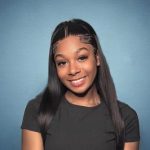 By Naveyah Boykin
All right, so here’s how it really feels: I’m a young Black woman, right? And, honestly, nothing chills me more than the idea that a bunch of total strangers — mostly white dudes, usually with some Christian nationalist thing going on in the background — think they get to make the rules about my body. Wild. Apparently, I’m not an actual person to them; I’m some kind of symbol or a prop in their political theater. Meanwhile, to me, this body is where I keep all my plans, my fears, everything that makes me, me. Why should some old politician’s interpretation of religion get to veto my choices? Nah.
The way I see it, white Christian nationalism is not your average Sunday church crowd. We’re talking about a political movement, built around the idea that America is for white Christians, period. That’s the dream for them. Control who counts, who gets rights, and, yup, literally, who controls our bodies. You cannot convince me otherwise. Reproductive freedom is right at the center of this battle.
Read more of Naveyah’s essay in Freethought Today
THIRD PLACE
Gabrielle Williams, 20, Howard University, $2,500.
 By Gabrielle Williams
When our school held its first-ever Black History Month assembly, I felt a flicker of hope. As a Black student in a predominantly white, conservative school district, I felt isolated, a step toward understanding. But, as students were dismissed from the auditorium, I heard laughing. “What a waste of time.” “That was so dumb.” “Why do we even need that?” These weren’t careless comments. They reflected a deeper hostility toward confronting systemic inequality.
What they didn’t know was that assembly was created by PACCT (People of All Cultures and Colors Together), a club I co-founded. We built PACCT to give students of color a space to share what we face every day: microaggressions, racism, isolation and the desire to be heard and understood. The assembly was our attempt to build empathy. Instead, it exposed how much of it was missing.
Read more of Gabrielle’s essay in Freethought Today
FOURTH PLACE
Henry Olango, 21, Penn State University, $2,000.
 By Henry Olango
When I was pulled over by police at gunpoint last summer coming home from college, I realized something I’ll never forget: Freedom in America is often conditional for people who look like me. I’m a Black student from Erie, Pa., a city once labeled one of the worst places in America for African Americans to live. Erie is no stranger to police violence, racial profiling or political regression. It’s also a place where white Christian nationalism is not just an ideology, it’s showing up at the ballot box, shaping laws and silencing voices like mine.
The threat white Christian nationalism poses to voting rights is not abstract — it’s real, deliberate and purposeful. While cloaked in religious language, this movement is deeply political, often working to suppress the votes of underrepresented groups under the disguise of election integrity. It pushes policies that disproportionately affect Black communities, such as voter ID laws, reduced polling places in urban neighborhoods and opposition to early or mail-in voting. These aren’t just bureaucratic obstacles placed in our way, they are tools of disenfranchisement. I’ve seen the consequences of this firsthand. Erie’s recent shift toward Republican leadership, bolstered by white evangelical turnout, came with rising hostility toward DEI programs and limited access to voting under the pretense of fraud prevention. My own family, friends and neighbors — people without stable housing — find it harder and harder to have their voices heard. When our voice is silenced at the polls, we are silenced everywhere else too — in our school board, in our health care and in our community.
Read more of Henry’s essay in Freethought Today
FIFTH PLACE
Jaianah Hightower, 20, Morgan State University, $1,500.
 I wake up in the morning and breathe. I look at myself in the mirror and wonder what today will bring. The sun rises, but peace doesn’t. When I walk down the street, I carry more than a body — I carry generations of struggle, a patchwork of identities that make me a walking target: Black. Woman. Queer. Nonreligious. To whom do I pose a threat by simply existing? The answer stares back: white Christian nationalists.
Among the many freedoms under siege, threats to reproductive rights cut the deepest into my life and my future. White Christian nationalism does not just oppose abortion — it seeks to control people like me under the illusion of “morality.” It wraps misogyny and racism in scripture, turning faith into a weapon against my autonomy. They say it’s about “life,” but whose life? Certainly not mine.
Read more of Jaianah’s essay in Freethought Today
SIXTH PLACE (tie)
JoJo Huntley, 20, Temple University, $1,000.
 I grew up hearing that this was the “land of the free,” but lately, I’ve been asking: free for who? As a 20-year-old Black man attending a Predominantly White Institution (PWI), trying to make sense of a country that seems more divided by the day, I’ve come to realize something unsettling — white Christian nationalism isn’t just a political idea. It’s a threat. Not just to an abstract “freedom,” but to me, my family and the people I love. Especially when it comes to my reproductive rights.
You may ask, what has a young man like me to do with issues such as reproductive rights? Here’s the thing: Bodily autonomy is not something that affects only women. It’s a human issue. It is a struggle for equality of women, for the individual’s right to live his or her life in the way he or she wants to live. In my personal world, Black women are my mother, sister, girlfriend — and we know all too well that this right is threatened daily.
Read more of JoJo’s essay in Freethought Today
Arianna Sukhdeo, 18, Johns Hopkins University, $1,000.

As someone passionate about health care and community advocacy, I’ve seen firsthand how reproductive health care decisions are deeply personal, complex and often urgent, especially for women and people of color. The growing influence of white Christian nationalism in American politics makes this reality more dangerous. This ideology isn’t just about religion; it’s about power, control and enforcing a narrow vision of America that targets the most vulnerable among us.
When the U.S. Supreme Court overturned Roe v. Wade in 2022, abortion access became a matter of geography, not justice. More than 1,300 abortion restrictions have been enacted since Roe was first decided in 1973, but the fall of federal protections has drastically intensified their harm. According to the Commonwealth Fund, “as of Jan. 12, 2023, abortion is banned in 12 states with very limited exceptions and unavailable in an additional two,” and 66 clinics in 15 states stopped providing abortion care in the first 100 days after Roe was overturned. These rollbacks disproportionately affect Black, Latino and Indigenous people, those who already face systemic barriers to health care and are less likely to have the resources to travel for care.
Read more of Arianna’s essay in Freethought Today
SEVENTH PLACE
Aryan Singla, 18, University of Connecticut, $750.
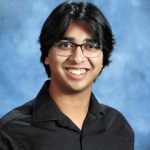 As a Hindu American, I have always loved the cultural diversity of my faith — its rituals, its stories and its emphasis on unity amidst multiplicity. As a child, I reveled in presenting my heritage, like when I did my presentation on Shah Rukh Khan in fourth grade, playing Bollywood songs for a classroom full of curious peers. Yet, this pride has become more and more overshadowed by white Christian nationalism, in particular its threats to diversity, equity and inclusion (DEI) programs, which endanger the cultural inclusivity that has enabled me and my peers to thrive.
White Christian nationalism, in demanding a homogeneous, Christian-majority nation, routinely calls DEI efforts “divisive” or “anti-American.” To me, in my community, where I have organized Holi and Diwali celebrations via my school’s Asian-American Club, such assaults are personal. DEI initiatives in the workplace and schools form spaces in which my Hindu heritage — prayer at HCC Temple, guiding young Hindu kids — are respected and appreciated, not viewed as a “waste of time.” When nationalist discourse informs policies that undermine such efforts, such as prohibiting cultural education or limiting inclusive curricula, it especially jeopardizes the recognition of minority religions. For my family, this would involve my younger cousins growing up in an environment where their cultural heritage is stigmatized, their traditions criticized, or their identities perceived as “un-American.”
Read more of Aryan’s essay in Freethought Today
EIGHTH PLACE
Chris Previlon, 19, University of Central Florida, $500.
 I grew up in a Christian home where I learned to love others, give back to the community and have confidence in a better future than the one I currently inhabit. However, as I’ve gotten older, I’ve realized that white Christian nationalism is about control more than faith. It uses religion as a weapon to promote a limited worldview that ignores the opinions of entire communities and excludes people who look like me. The increasing assault on diversity, equity and inclusion (DEI) initiatives in businesses and schools is among the most obvious instances.
DEI efforts have been crucial in determining my chances and sense of value as a young Black man. Having grown up in a home where my mother, grandmother and siblings provided for me, I have experienced social and financial hardships that many people cannot fathom. I have, nonetheless, also defied odds. I started Beyond Balloons, a balloon décor business, when I was 14 years old, and it eventually worked with well-known companies like Anthropologie and Walmart. I got accolades for business and theater leadership, designed marketing for school events, served as vice president of the student body and graduated with honors from high school. I was even the youngest cast member in a community production with over 200 people who auditioned when I made my New York City musical theater debut at the age of 19. These successes were made possible by DEI programs, which provided advice and visibility in addition to motivation.
Read more of Chris’ essay in Freethought Today
NINTH PLACE (tie)
Alayna Champ, 19, University of South Carolina, $400.
 I first learned the power of visibility and voice through ballet. Throughout high school, I served as an ambassador for Brown Ballerinas for Change, a nonprofit founded in 2020 after the murder of George Floyd. We use a historically exclusive art form — where Eurocentric beauty standards and a lack of diversity have long limited Black dancers — to champion social justice. Performing in brown tights and pointe shoes, mentoring young dancers of color and advocating for equity, we push for inclusion in spaces that weren’t built with us in mind. That experience taught me how art can spark change and how advocacy are deeply connected. Today, I carry that same commitment to justice into new arenas — especially voting rights, which are under increasing threat from the rise of white Christian nationalism.
This movement, which falsely insists that the United States was founded to be a white Christian nation, doesn’t just aim to erase history — it actively undermines progress. One of its most dangerous tactics is the suppression of voting rights. Through laws and policies like gerrymandering, restrictive voter ID requirements, and targeted roll purges — often framed in religious or moral language — these efforts shrink access to the ballot box, particularly for communities of color, young people and working-class voters.
Read more of Alayna’s essay in Freethought Today
Lauren Nsele, 21, Boston University, $400.
 When I first began organizing around harm reduction and overdose prevention at Boston University, I thought I was filling in the gaps where the system had failed. But, the deeper I got into the work, the more I realized that this crisis was not just about drugs. It was about punishment. About who gets saved and who gets left behind. The more I learned about the roots of the War on Drugs, the more I started to see the fingerprints of something deeper and more dangerous: white Christian nationalism. The moral framework that has shaped how this country views addiction.
The War on Drugs didn’t start with concern for public health. It was born from racism and state power. Politicians in the ‘80s weaponized so-called “family values” and moral panic to pass laws that criminalized Black and Brown people under the guise of “saving” them. Drug use was framed not as a symptom of systemic neglect or trauma, but as a sin. Even language was used to justify this approach: the words “clean,” “pure,” “redeemed” and “fallen” are echoed with religious overtones. Politicians like Ronald Reagan used Christian language to frame drug use as a sin and addiction as a spiritual failure, not a public health crisis. First Lady Nancy Reagan told us to “Just Say No,” as if willpower could override structural violence. Laws were passed with the blessing of religious leaders who preached abstinence over treatment and shame over science. The result? Generations of Black families were destroyed by incarceration. Communities were flooded with police but starved of health care. I have seen the legacy of this up close. I live in Boston, one of the epicenters of opioid misuse. I have heard stories from my community where Black people were criminalized for surviving or for being poor. Christian nationalist rhetoric justified this with talk of “cleansing” communities and “restoring order,” all while ignoring the root causes of addiction: poverty and systemic neglect. By conflating criminal justice with moral salvation, white Christian nationalism has built a system where civil liberties are collateral damage.
Read more of Lauren’s essay in Freethought Today
TENTH PLACE (tie)
Gabrielle Telsaint, 18, Florida International University, $300.
 As a queer Haitian American woman raised in a religious household, I have often had to live in two worlds: one where I’m expected to hide parts of myself to maintain peace, and another where I can begin to live authentically. White Christian nationalism threatens to make the first world permanent for me and for countless others like me.
White Christian nationalism is not just about faith. It’s about using a narrow, extremist interpretation of Christianity, centered on white, conservative, patriarchal values, to control laws and policies that affect all of us. LGBTQ rights are one of its main targets. Across the country, this movement has pushed for laws banning gender-affirming care, restricting conversations about LGBTQ identities in schools, and even trying to roll back marriage equality. These policies are framed as protecting “religious freedom,” but what they really do is prioritize one belief system over others and strip away basic human rights that the ones before us have fought so hard to achieve.
Read more of Gabrielle’s essay in Freethought Today
Layla Vaughan, 19, University of North Carolina, $300.
 I am a rising sophomore at the University of North Carolina at Chapel Hill, a proud Black woman, a daughter and a student committed to helping others. I am also agnostic. I do not claim to have all the answers about spirituality, but I believe no one belief system should dominate others, especially in a country founded on freedom. My values, equality, fairness and inclusion shape my education, my career goals and my desire to become a physician assistant who serves people of all backgrounds with compassion and respect.
This is why I am deeply concerned about the rise of white Christian nationalism and its attack on civil liberties, especially its efforts to dismantle diversity, equity and inclusion (DEI) programs. White Christian nationalism is not just a religious ideology. It is a power-based political movement that seeks to assert power and control by promoting the belief that America was founded for and should be led by white Christians. It threatens to erase the rights and visibility of those who do not fit into that narrow identity, including people like me and others in the BIPOC community.
Read more of Layla’s essay in Freethought Today
HONORABLE MENTIONS ($200 each)
Here are excerpts from the honorable mentions in 2025 BIPOC essay contest.
Blake Battle, 19, Georgia Southern University.
 It truly is alarming to me especially, as someone who does not follow any religion at all, that laws affecting us all now are being shaped by just a single religious ideology. When the separation of church and state becomes unclear, democracy weakens. However, to remain being silent is not an option.
I strive to sustain an image of America using action, ballots, and learning. This vision allows everyone to prosper irrespective of origin, faith, or race.
Blake, 19, is from Georgia and attends Georgia Southern University with plans to major in biochemistry.
Akrit Burroughs, 18, Kennesaw State University.
 This is personal to me. My queer, trans, and nonbinary loved ones are close to me, and I’ve seen how they struggle to deal with the terror of their criminalization for simply being who they are. I’ve seen how they fear they’ll be cut off from healthcare, from being housed, from basic dignity, just because politicians believe their version of the Bible should be imposed on the rest of us. White Christian nationalism doesn’t aim to just silence the LGBTQ+ community – it aims to legislatively remove them from public life. That terrifies me, and it should terrify anyone who believes in freedom.
This threat disproportionately affects BIPOC communities already subject to more discrimination, violence, and marginalization. White Christian nationalism as policy sanctions the very same regime that oppresses people who are at the intersection of race, gender, and sexuality. It consolidates an America where not all lives are equal and where not all bodies are worth saving.
Akrit Burroughs, 18, of Georgia, attends Kennesaw State University, with plans to major in therapy.
Jendayi Guamerah-Oliver, 18, Xavier University.
 When Black students are denied the truth of their own history, it’s harder for them to see their place and potential in the world. It’s harder to feel like you belong on a college campus when your story is constantly erased or watered down. It also disengages white students in understanding better the life and effects of generational policies that negatively affected Black and Brown students and families and creates space for false narratives.
What’s most harmful is how white Christian nationalism wraps itself in morality while promoting exclusion. When access to education becomes tied to a narrow view of who is “deserving,” entire communities are pushed further to the margins. Higher education should be about opening doors, not guarding them.
Jendayi Guamerah-Oliver, 18, from Indiana, attends Xavier University, with plans to major in mathematics.
Natalya Hagee, 18, Temple University.
 These aren’t just distant political issues. They impact people in my life every day. One of my closest friends is a Black trans teen. When their access to gender-affirming care was threatened by a new state policy backed by Christian nationalist groups, it wasn’t just a news headline — it was a direct attack on their health, identity, and future. They’ve stopped feeling safe at the doctor. They question their place in public spaces. And they’re not alone.
Christian nationalism fuels a culture where being queer and being Black is treated like a problem, instead of part of someone’s humanity. It tries to erase people like my friend, and silence allies like me.
Natalya Hagee, 18, is from Washington, D.C., and attends Temple University.
Ava Heims, 19, Syracuse University.
 The greatest defense to authoritarianism is an educated, vocal populace. We have to make changes rather than wait for those around us.
Silence is submission. We have seen a plethora of oppressive governments tear themselves apart until only a lifeless husk remains. We must discomfort the comforted through public displays of frustration. Politicians must fear their populace to represent their constituents effectively. Queer and gender non-conforming citizens have suffered enough from Christian nationalism infiltrating our legislature under the guise of morality.
Ava Heims, 19, is from Louisiana and attends Syracuse University, with plans to major in computer science.
Fiolajesurera Orelaja, 18, American University.
 I am a young Black woman on the cusp of adulthood, so this attack feels deeply personal to me. I was raised on watching my mother and her sisters work twice as hard to get half as much care. I have heard tales of missed diagnoses, of compelled births, and of life-changing medical neglect. But in today’s world, that’s not just whispered stories; it’s state policy.
Trigger laws are the agenda of a small-minded worldview using religion as a weapon to control bodies, particularly the bodies of women of color.
It will take more than courts and legislation to defeat white Christian nationalism. It requires cultural courage.
Fiolajesurera Orelaja, 18, of Maryland, attends American University, with plans to major in international relations.
Bri’Kayla Person, 19, University of Central Oklahoma.
 Education has always been the key to my future, but I’ve also learned that talent and hard work don’t always speak as loudly as the color of your skin in this world.
I would walk away from interviews feeling confident, only to be denied again and again. Over time, it began to feel like my qualifications weren’t the issue—my Blackness was. That’s why the growing attack on Diversity, Equity, and Inclusion (DEI) programs by white Christian nationalism hits me so personally. DEI is one of the only tools working to even the playing field, and watching it be dismantled feels like watching the ladder I’ve been climbing get kicked over.
Bri’Kayla Person, 19, of Texas, attends University of Central Oklahoma with plans to major in chemistry and forensic chemistry.
Jaydon Santiago, 18, UCLA.
 These policies aim to erase Black and Latino histories from education, suppress voting access, and dismantle affirmative action.
The policies shaped by white Christian nationalism threaten my family’s ability to access equal educational opportunities, fair employment, and protection from racial discrimination.
The battle against white Christian nationalism is more than a political fight; it’s about defending the fundamental right to exist freely, without religious or racial oppression. As an artist and individual committed to secularism and inclusion, I choose to use my voice to fight against these injustices, ensuring that future generations inherit a society grounded in equality, not exclusion.
Jaydon D. Santiago, 18, is from California and attends UCLA.
Laiya Thorpe, 20, North Carolina A&T State University.
 White Christian nationalism masquerades as patriotism infused with Christian ideals, but it advocates a harsh, exclusive morality based on white, conservative Christianity. This ideology is not satisfied with personal opinion; it seeks to influence public law and policy to reflect its viewpoints. This is particularly harmful in its assault on LGBTQ+ rights.
These are not theoretical political debates; they are life-and-death struggles. White Christian nationalism holds the power to decide who can live freely and safely, and those most affected are often those who are already marginalized.
Laiya Thorpe, 20, is from Tennessee and attends North Carolina A&T State University, with plans to major in physical therapy.
Donovan Tyler, 19, University of Virginia.
 In states across the country, politicians backed by white Christian nationalists are cutting DEI offices, banning programs that support students of color, and rewriting what fairness means. This hurts everyone, but it hits people like me the hardest. If I walk into a space and I don’t see anyone who looks like me, I start questioning if I belong. Without DEI, there’s no effort to change that. White Christian nationalism is not Christianity. It’s a political identity that uses faith as a mask. It wants to control how we learn, live, and we show up in the world. It tells me I should only exist in specific ways. That my story only matters if it fits the version they’ve approved. That’s not freedom. It’s domination.
Donovan Tyler, 19, is from Maryland and attends University of Virginia with plans to major in commerce.
Miriam Zepeda Perez, 18, Northern Arizona University.
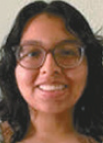 Every day, we hear more and more news about mass deportations, regardless of their citizenship status, families being separated, and people being sent to foreign countries. We fear the very people who are supposed to protect us. Christian nationalism threatens and violates my people’s rights by throwing us in cages, calling us rapists, thieves, and criminals. This only spreads hate, misinformation, and dangerous stereotypes that make us easy targets for discrimination and victims of violence.
Christian nationalism has done nothing but set back decades of progress for religious, ethnic, communities and the LGBTQ+ community.
Miriam Zepeda Perez, 18, is from Arizona and attends Northern Arizona University with plans to major in engineering.
This contest is named for the late David Hudak, an FFRF member who left a bequest to generously fund a student essay contest. FFRF has offered essay competitions to students of color since 2016. It has also offered essay contests open to all college students since 1979, high school students since 1994, grad students since 2010 and one for law students since 2019. FFRF’s four other essay contests for students are open to all eligible students. The Hudak competition was created to recognize and provide encouragement to a minority within a minority and also to showcase their unique freethinking perspectives and challenges.
FFRF thanks Lisa Treu for managing the details of this and FFRF’s other essay competitions. FFRF would also like to thank our volunteer and staff readers and judges, including Dan Barker, David Chivers, Annie Laurie Gaylor, Susan Gould, Jeffrey La Vicka, Sammi Lawrence, Michael Luther, Katya Maes, David Malcolm, Jason Mosebach, Chris O’Connell, Andrea Osburne, Joanna Papich, Sue Schuetz, PJ Slinger, Kimberly Waldron and Karen Lee Weidig.
Cornelius Vander Broek Essay Contest for ‘Graduate/Older’ Students
FFRF is proud to announce the awarding of $16,250 to the nine top winners and four honorable mentions in the 2025 Cornelius Vander Broek Graduate/Older Student Essay Competition.
Students were asked to write on the topic: “State/church issues endangered by the Trump administration’s capitulation to Christian nationalism.” Student essays were asked to be focused on one issue that mattered to the contestants under threat in the current administration due to its Christian nationalist policies.
The winners, their ages, the colleges or universities they attend, and the award amounts are listed below.
FIRST PLACE
Julis Calvert, 26, University of North Texas, $3,500.

By Julius Calvert
Somewhere in the United States, a Black student is enrolled in an introductory neuroscience course. This student was previously a homeless youth and is now a first-generation college student following the death of both their parents. They balance studying while paying bills and dream of integrating cognitive neuroscience methodology into counterterrorism and public safety policy. Although they hope their institution will support them given their hardships, the fruits of their labor are then barred by financial challenges, and they are forced to withdraw from classes indefinitely.
This glimpse into my personal story offers a first-hand account of the consequences that the Trump administration’s destruction of science funding has on minority and low-income students.
Read more of Julius’ essay in Freethought Today.
SECOND PLACE
Kyria Santa, 24, Emory University, $3,000.

By Kyria Santa
As Robert F. Kennedy Jr. stands in public discourse, both in person and online, and repeatedly states the debunked claim that vaccines cause autism, the public erupts — not in outrage, but in applause. These moments aren’t just pseudoscience in action, they’re dog whistles to a Christian nationalist movement that has long viewed autism not as a neurological difference, but as a moral or spiritual failing.
Under the Trump administration, this ideology has found fertile ground. Christian nationalism doesn’t whisper conspiracies; it shouts them into policy. The result: A renewed societal hostility toward autistic people, a dismantling of legal protections and a culture that views neurodivergence as something to fix, not accommodate.
Read more of Kyria’s essay in Freethought Today.
THIRD PLACE
Ian Webb, 29, Georgia Institute of Technology, $2,500.


I live in Atlanta, which is a vibrant, progressive city surrounded by a state that’s become a testing ground for Christian nationalist policy and fearmongering. As a gay man and activist in my late 20s, I’ve spent the last decade working to elect leaders like Joe Biden, Kamala Harris, Raphael Warnock and Jon Ossoff — people who understand that LGBTQ rights are human rights and that the wall between church and state is not optional, but the bedrock of American society. But, now that foundation is crumbling under the weight of a coordinated, well-funded and rapidly accelerating movement: Christian nationalism.
Read more of Ian’s essay in Freethought Today.
FOURTH PLACE
Bailee Roberts, 23, Lewis & Clark Graduate School of Education and Counseling, $2,000.

By Bailee Roberts
Somewhere in America, a woman lies in a hospital bed, unmoving, unknowing, and already dead. Her body is hooked to machines — not to save her life, but to preserve her womb. In the world of “The Handmaid’s Tale,” this would be expected: women’s bodies reduced to vessels, animated only by the state’s desire to reproduce.
This isn’t a dystopia. It’s Georgia. It’s the law. And because her pregnancy had progressed just three weeks beyond the six-week gestation limit, her body remained on life support — not for her, but for the state. Her family was left grieving a daughter they could not bury, because Georgia had other plans for her body.
Read more of Bailee’s essay in Freethought Today.
FIFTH PLACE
Jacqueline Thomas, 25, University of North Texas, $1,500.

By Jacqueline Thomas
As a first-generation college student, I know the importance of accessible public education. I was raised by a single mother in a small town in Texas, and her lack of education meant that we often struggled to make ends meet. She made it clear to me that education was the way to create a better future and break the cycle of poverty. That’s why the Trump administration’s push for federal vouchers for private religious education is a direct threat to future generations of students. It’s not just about “school choice,” but rather the much more dangerous idea of Christian nationalism, which threatens to push conservative beliefs into society, violating the separation of church and state and threatening our democracy. The push for vouchers diverts taxpayer dollars to religious schools, which are not bound to strict curriculum regulations like public schools are. Instead, they are able to teach what they deem important, often promoting harmful ideologies such as creationism over evolution, abstinence-only sex education, and an “us versus them” attitude on different cultures and backgrounds.
Read more of Jacqueline’s essay in Freethought Today.
SIXTH PLACE
Claire Rosemary Lewis, 24, Duke University, $1,000.

By Claire Rosemary Lewis
I have no concept of being introduced to Christianity. One of my earliest memories is my first day of preschool, when the teacher at my fundamentalist Christian school told us the Genesis creation story. I was 4 years old and already knew the story, even though I can’t recall anyone telling me the story before then.
We weren’t called Christian nationalists back then. In my early childhood, being a fervent, evangelical, America-loving Christian, particularly in the Midwest, was treated as the norm and was a very good, patriotic thing to be. Now, under President Trump, Christian nationalists are in the American zeitgeist like they never were when I was a child, accelerating and vocalizing contempt for the concepts of diversity, equity, and inclusion — contempt which existed in the early 2000s, but had yet to achieve a place in the public consciousness beyond those of us who grew up steeped in it.
Read more of Claire’s essay in Freethought Today.
SEVENTH PLACE
Ione A. Rodriguez, 30, University of Texas at San Antonio, $750.

By Ione A. Rodriguez
On day one of Trump’s second term, his administration signed a slew of executive orders that were direct attacks on the transgender community, under the guise of protecting women and children. These executive orders have direct ties to the Christian nationalist movement.
Christian nationalism is the belief that the country was founded as a Christian nation and laws should be based on Christian values. According to the Public Religion Research Institute’s 2023 survey, roughly three in 10 Americans qualify as Christian nationalist adherents or sympathizers, meaning they strongly believe or support the idea that America should be Christian nation. Although the number is relatively small, Christian nationalists are well funded and now in government power under the Trump administration.
Read more of Ione’s essay in Freethought Today.
EIGHTH PLACE
Megan Lyman, 29, Michigan State University, $500.

By M Lyman
The future of democracy in the United States is currently under threat by the Trump Administration. Trump has created an oligarchy that is bringing the United States of America closer and closer to fascism. Christian nationalist policies are a huge factor in America’s fall toward fascism and the end of the separation between church and state. Merging of American and Christian identities is the ideology that makes up Christian nationalism. The separation between church and state has long been blurry — but it seems that Trump intends to erase the line altogether. After winning through a campaign rife with violent Christian nationalist imagery, now in office, Trump is bringing his vision to life.
Christian nationalists want the government to reflect and enforce traditional Christian values. In the first month of the Trump presidency, the words “transgender,” “gender identity” and “equity” were swiftly removed from official government sites. Research papers have been removed from publication and stripped of gender-related terms. The option of an “X” gender marker was removed from passport applications. Numerous bills have been introduced that intend to legalize discrimination on the basis of religious beliefs. The American Civil Liberties Union is currently tracking 456 anti-LGBTQ bills in statehouses across the United States.
Read more of M Lyman’s essay in Freethought Today.
NINTH PLACE
Michael Richardson, 25, Berklee College of Music, $400.

By Michael Richardson
Whether or not Donald Trump authentically considers himself a Christian, the policy aims of his second administration are informed by the ideology of the American Christian nationalist movement. A clear outline for Trump’s second term is Project 2025, a policy agenda written by The Heritage Foundation, originally founded by Christian fundamentalists to push the Nixon administration further to the right.
Project 2025’s scope is massive — 887 pages recommending the Trump administration strip social and voting rights, further unbalance tax policy, enfeeble the federal bureaucracy and empower corporations to pollute and exploit more of the country and its people. I am an LGBT individual, and it is terrifying to witness the erosion of the rights my community has fought for decades to win.
But overarching the personal is the societal. Climate change underpins all other issues. If the world is too hot on which to live, nothing concerning the living matters.
Read more of Michael’s essay in Freethought Today.
TENTH PLACE
Matthew Reyes, 28, University of Texas at San Antonio, $300.
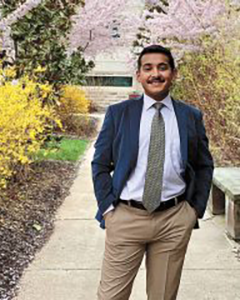
By Matthew Reyes
The threat to secularism in the United States most adversely impacts my ability, as a researcher on LGBTQ topics, to contribute to scholarship on equity, social attitudes toward political movements and socioeconomic conditions within the queer community.
With the Trump administration’s ongoing destruction of the federal research-funding apparatus, several grants that contribute to our understanding of the lived experiences of LGBTQ individuals have been voided. For example, the Department of Government Efficiency recently cancelled a grant for a professor at Ohio State University to study the nexus between cannabis use disorder and queer women. Federal funding for such research projects that advance equity for the LGBTQ community will continue to be targeted for the foreseeable future, and this administration will do so to signal support for the Christian nationalist agenda.
Read more of Matthew’s essay in Freethought Today.
HONORABLE MENTION ($200 each)
Bailey Diaz, 25, San Jose State University
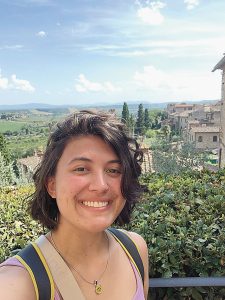
By Bailey Diaz
Christian nationalism existed in the United States long before the Trump administration, but has been brought to the forefront of conservative politics in recent decades, and now poses a threat to public health.
Science, and, by extension, public health initiatives are data driven and do not adhere to the moral standards of any religion or ideology. As such, Christian nationalists perceive scientifically backed policy as a restriction of their religious freedom and more broadly as a threat to the rule of Christian values in the United States.
Read more of Bailey’s essay in Freethought Today.
Lewis Luis, 27, City College of New York
By Lewis Luis
LGBTQ+ people face substantial increases in discrimination because of rhetoric from both the Trump base and evangelical Christians. Trans people especially face increased scrutiny. In fact, Trump signed an executive order called “Defending Women from Gender Ideology Extremism and Restoring Biological Truth to the Federal Government.” This order, signed on day one of Trump Version 2, attempts to end legal recognition of transgender and nonbinary persons in federal law. This would allow for legal discrimination of these persons in the workplace. Additionally, it would also include discrimination in federal health care, education and housing, which creates a dangerous position for trans people.
Read more of Lewis’ essay in Freethought Today.
Jeremiah J. Moore, 31, University of North Carolina At Pembroke
By Jeremiah J. Moore
Christian nationalism emerged as a key motivator behind anti-DEI activism. It conflates white racial identity with conservative Christian ideology, casting DEI as a secular threat to a fantasy of a Christian nation. From this perspective, policies aimed at equity are understood not as inclusive measures, but rather as assaults on a white Christian identity. Language around religion is used to argue that DEI discriminates against Christians, appealing to a false narrative of victimization and hiding an agenda of maintaining cultural hegemony.
Read more of Jeremiah’s essay in Freethought Today.
Morgan Wegner, 26, Upper Iowa University
By Morgan Wegner
Encouraged by authorities such as President Trump, Christian nationalists are empowered to believe that they are true Americans where others are not. People who do not fit the white, cisgender, heteronormative box are vilified with fearmongering tactics that present them as a threat to the Christian American way of life. Christianity itself is not inherently anti-LGBTQ+. However, Christian beliefs tend to tie sexuality and gender expression with morality, perceiving the LGBTQ+ community as anti-Christian and immoral.
Read more of Morgan’s essay in Freethought Today.
FFRF thanks Lisa Treu for managing the details of this and FFRF’s other student essay competitions. We also would like to thank our volunteer and staff judges, including: Adeola Abilawon, Paul Baker, Dan Barker, Jon Galehouse, Annie Laurie Gaylor, Richard Grimes, Tim Hatcher, Linda Josheff, Tori Mizerak, Chris O’Connell, Brian Gillaspie, Ricki Grunberg, Katya Maes, Kurt Mohnsam, Brooks Rimes, PJ Slinger and Karen Lee Weidig.
Diane and Stephen Uhl Memorial Essay Competition for Law Students
The Freedom From Religion Foundation is proud to announce the three winners of the Diane and Stephen Uhl Memorial Essay Competition for Law Students.
FFRF paid out a total of $9,000 to the winners of this year’s contest.
Law school students were asked to write an essay on this topic: Under the First Amendment, can states require religious organizations that receive government funding to comply with anti-discrimination laws? Following the Supreme Court ruling in Carson v. Makin, religious organizations seeking to participate in government funding programs have argued that requiring them to comply with anti-discrimination laws in order to receive public money violates their constitutional rights. Respond to the argument that anti-discrimination laws cannot be enforced against religious schools receiving public funds.
For ease of reading, the essays published here do not include the footnotes and citations that were included in the authors’ submissions. Grading and selecting of the winners were done by the FFRF Legal Team.
Winners are listed below and include the law school they are attending and the award amount.
First place: Michael O’Key, UCLA School of Law, $4,000.
Second place: Vasili Sgourakis, Iowa Law School, $3,000.
Third place: Nerma Pasic, University of Houston Law School, $2,000.
All eligible entrants will receive a digital year-long student membership in FFRF.
FFRF appreciates its members who make the effort to contact local high schools, colleges and universities to help publicize its competitions.
FFRF has offered essay competitions to college students since 1979, high school students since 1994, grad students since 2010 and one dedicated to students of color since 2016. A fifth contest, open to law students, began in 2019.
“FFRF is happy to see another generation of freethinkers raising their voices in protest against the continuing threat of Christian nationalism,” says FFRF Co-President Annie Laurie Gaylor. “The next generation promises to have the greatest population of freethinkers yet, and FFRF is proud to lend its support to keep student advocacy alive and thriving.”
The Freedom From Religion Foundation is a U.S.-based nonprofit dedicated to promoting the constitutional principle of separation between state and church and educating the public on matters of nontheism. With over 42,000 members, FFRF advocates for freethinkers’ rights across the globe.